
A corporate carbon footprint accounts for greenhouse gas emissions within a defined organizational and reporting boundary. Start by agreeing which sites, activities and reporting year are included. Electricity bills are useful evidence, but they cannot describe the whole inventory.

Classify the source before collecting the numbers
Use the reporting framework selected for the inventory and keep responsibilities clear.
Scope 1: direct emissions
Collect relevant fuel-use, process and refrigerant records for sources the organization owns or controls.
Scope 2: purchased energy
Prepare purchased-electricity records. Purchased steam, heat and cooling may also belong here, depending on the activity.
Scope 3: value-chain activities
Screen relevant upstream and downstream categories, then request the activity data needed for those categories.
Make each record traceable to evidence
For a practical collection sheet, keep the site, activity, reporting period, quantity, unit, source document and responsible person together. Mark missing information before calculations begin.
Resolve overlapping records
A central invoice and a submeter may describe the same electricity. Document their relationship before adding values.
Retain calculation context
Record the emission-factor source and version so a reviewer can understand how a result was produced.
Keep customer requests distinct from the inventory
The European Commission published new guidance for non-EU CBAM operators in August 2026. A customer asking for emissions data may therefore need a particular product and production boundary. CBAM information is not interchangeable with a corporate footprint.
Confirm the requested output
Ask which framework, boundary and evidence the customer needs before preparing a file.
Sources: [4]
Frequently asked questions
Does a Scope 2 calculation complete a corporate footprint?
No. It covers a defined purchased-energy component. Other relevant emissions and the chosen reporting requirements still need assessment.
Does software verify the report?
Collecting and calculating data is separate from independent verification and any certification process.
See software for purchased-electricity Scope 2 records
DigitechX Carbon Management Software for Scope 2 organizes purchased-electricity data, factors and evidence for review. Its demonstrated scope does not cover a complete Scope 1–3 inventory or CBAM compliance.
Click to view details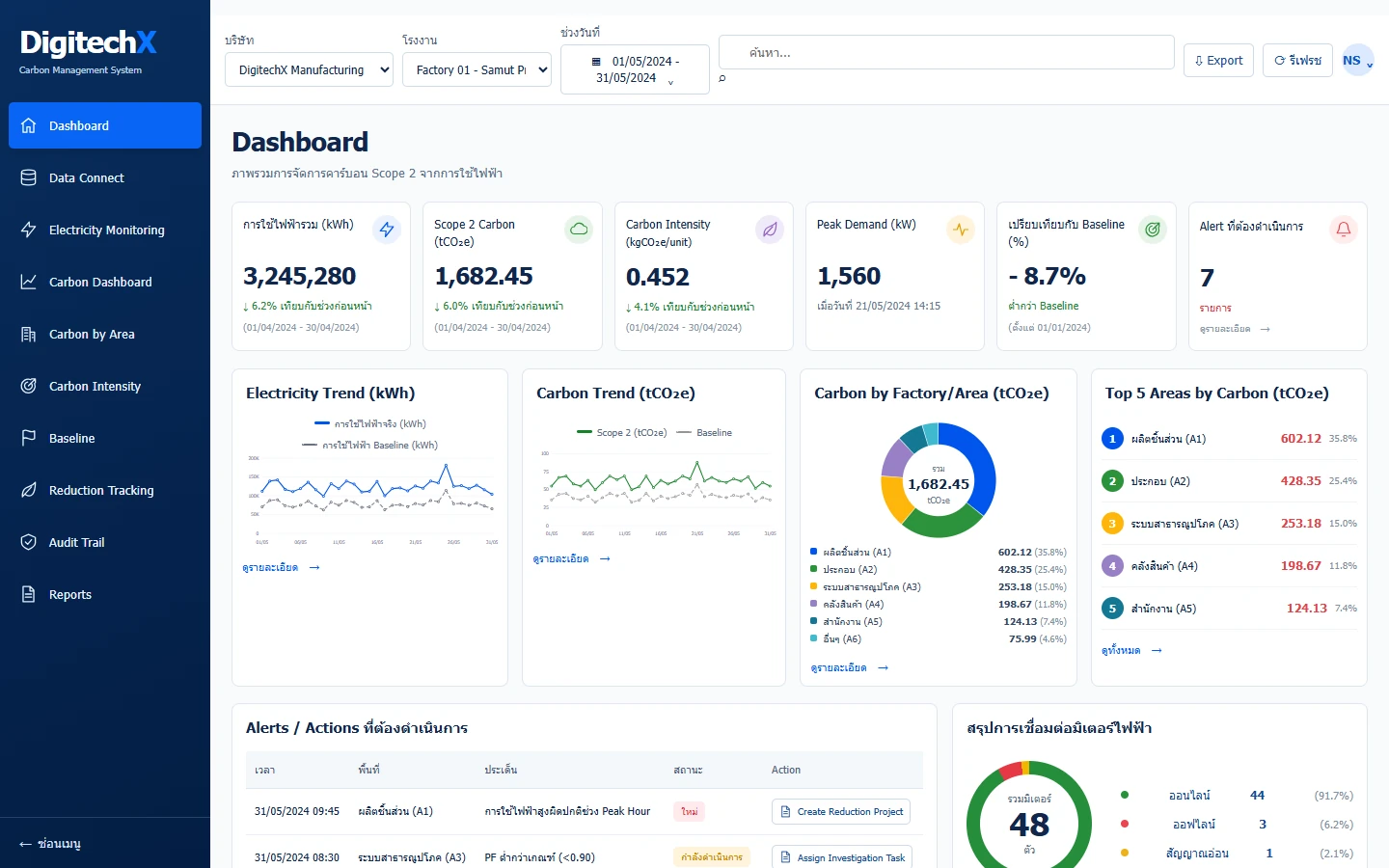
References
- GHG Protocol Corporate Standard
- GHG Protocol Scope 2 Guidance
- GHG Protocol Corporate Value Chain (Scope 3) Standard
- European Commission: CBAM legislation and guidance
Information and sources reviewed: 8 October 2026