
A factory electricity bill can change because of consumption, demand, timing or tariff components. Start with the actual account and billing period. The PEA document cited here explains the tariff structure; use the applicable current rates and conditions on your bill for any calculation.

kWh measures electricity consumed
A kilowatt-hour, or kWh, is a unit of energy. Reducing unnecessary operating time can reduce energy use, but a smaller monthly bill alone does not establish that a process became more efficient.
Choose a comparable period
Compare the same measurement boundary with production quantities and operating hours alongside electricity consumption.
Separate price from quantity
ERC’s 23 July 2026 announcement sets Ft for September–December 2026 at 16.23 satang per kWh. Separate Ft and other tariff components on the bill from changes in energy consumed.
Demand concerns the load reached together
Demand charges use the measurement interval and conditions of the applicable tariff. PEA tariff documentation refers to the highest average demand over a 15-minute interval; this is different from monthly kWh or an instantaneous spike.
Locate the relevant interval
Review interval data and the equipment operating together when the demand peak occurred.
Check before rescheduling
Assess production constraints and the bill's demand conditions before estimating benefits from staggered operation.
Sources: [1]
TOU changes the importance of operating time
Time-of-use, or TOU, tariffs distinguish charging periods. Moving an eligible activity to another period may affect cost without reducing the energy needed for that activity.
Calculate each period
Use the account's relevant rate and calendar, with the expected energy moved and any additional operating cost.
Verify the outcome
Review energy and financial results separately, keeping output and operating conditions visible in the comparison.
Frequently asked questions
Can lower kWh leave the demand charge unchanged?
Yes. A measure may reduce total energy while leaving the relevant peak interval or billed demand condition unchanged.
Is shifting work to off-peak always worthwhile?
No. Check tariff eligibility, staffing, production and quality constraints, and additional costs before changing the schedule.
Assess energy and financial results together
Use DigitechX Energy Saving Management Software to compare measures and estimated savings, then track results with the relevant baseline and operating context.
Click to view details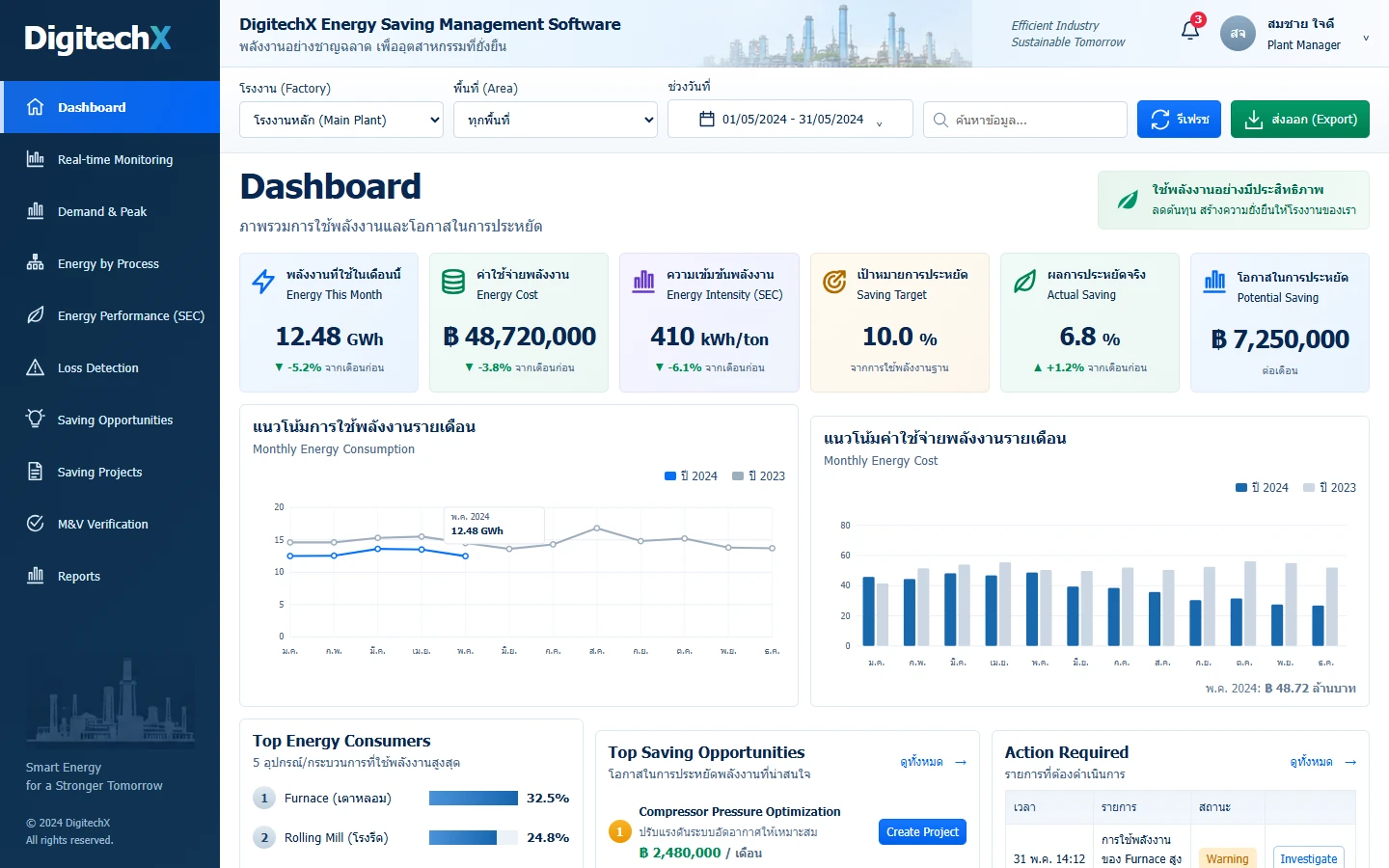
References
- PEA: Electricity Tariffs, January 2023, tariff structure reference
- Australian Government: Metering and monitoring
- DOE 50001 Ready: Energy Performance Indicators and Energy Baselines
- ERC: Ft for September–December 2026, announced 23 July 2026
Information and sources reviewed: 8 October 2026