
Maximum machine speed alone does not show a customer the value of an investment. Machine builders should compare acceptable output with costs for the same operating period. Overall equipment effectiveness (OEE) helps explain which changes concern stops, speed or quality, providing evidence for a more useful commercial proposal.
1. Match the output and cost boundaries
Good output in OEE passes the process first time. A faster machine that creates more rework may not reduce cost per good unit.
Choose a fair comparison
Use comparable products, materials, quality criteria and measurement periods. State any remaining differences so the customer can assess their effect.
Define included costs
Agree which labour, energy, consumables and equipment costs belong in the calculation. Apply the same boundary before and after the change.
Sources: [1]
2. Separate lower cost from extra capacity
Divide the agreed costs by the good units produced. If capacity increases, establish whether customer demand and downstream processes can use it before treating that capacity as additional revenue.
Illustrative calculation
A cost of 18,000 baht for 900 good units is 20 baht per unit. Producing 1,000 good units at the same cost gives 18 baht per unit, under those trial conditions only.
Avoid counting twice
If recovered time is valued as extra production, do not also count all of it as saved wages unless the customer actually avoids that expenditure.
3. Make the proposal traceable
ASQ distinguishes prevention, appraisal and failure costs. A machine proposal should show the added improvement expense alongside costs that may be avoided.
Retain assumptions
State the data period, test repetitions, investment, ongoing support and post-installation review method. Separate measured results from estimates.
Start with an agreed trial
Choose one machine or production job for which the customer has usable records. Agree the decision criteria before proposing a wider rollout.
Sources: [2]
Frequently asked questions
Where should a customer without OEE start?
Start with one machine: planned production time, stop time, total count, first-pass good count and the fastest possible cycle time under the agreed conditions (Ideal Cycle Time). Reconcile these records with the actual run before using them in a proposal.
Who should validate the commercial inputs?
Production validates counting, quality validates good-part criteria, and finance or cost accounting validates the cost categories used.
Build machine proposals around verifiable output
Explore DigitechX OEE with a production example and customer-authorised cost records to assess the evidence needed for the proposal.
Click to view details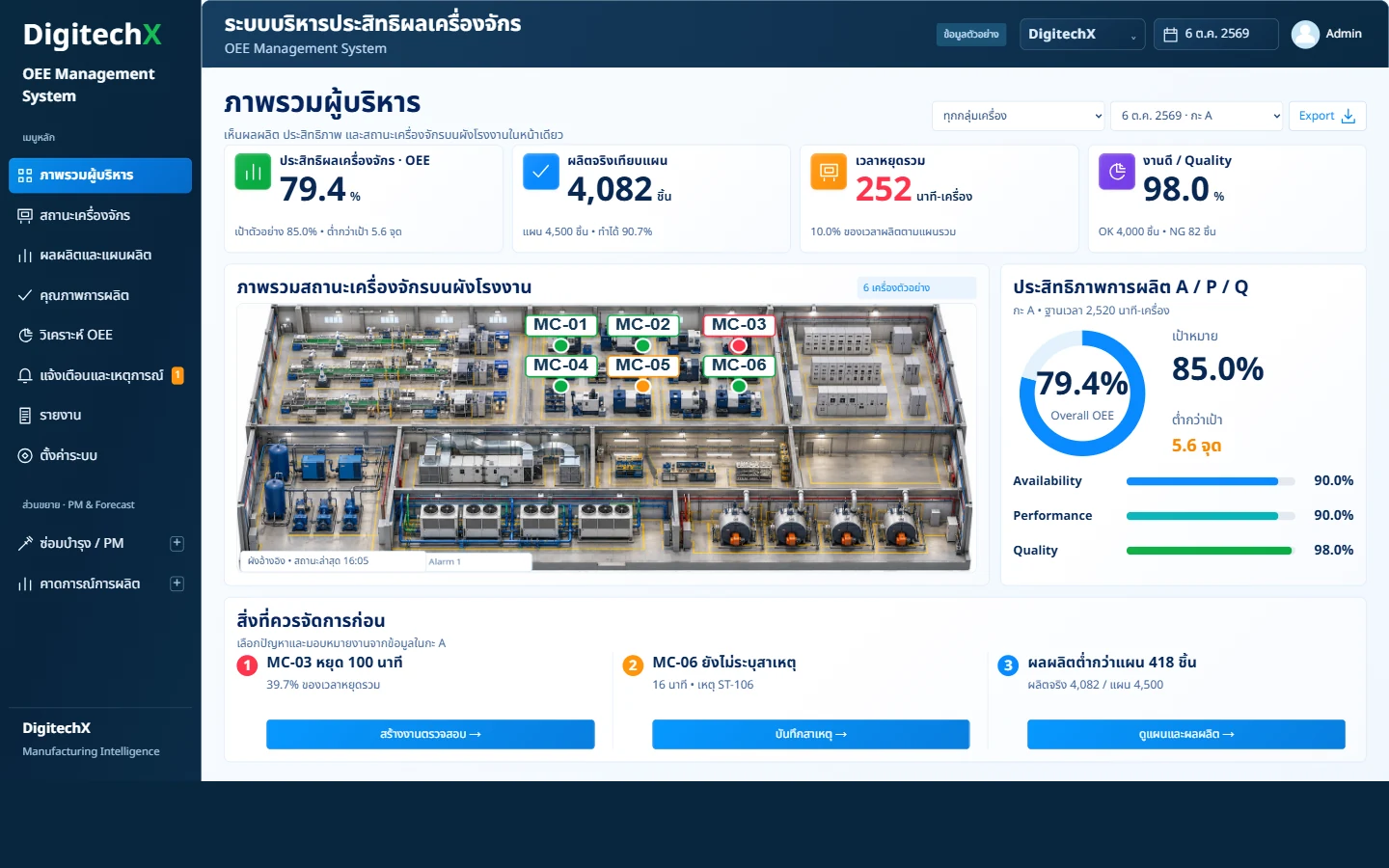
References
Information and sources reviewed: 9 October 2026