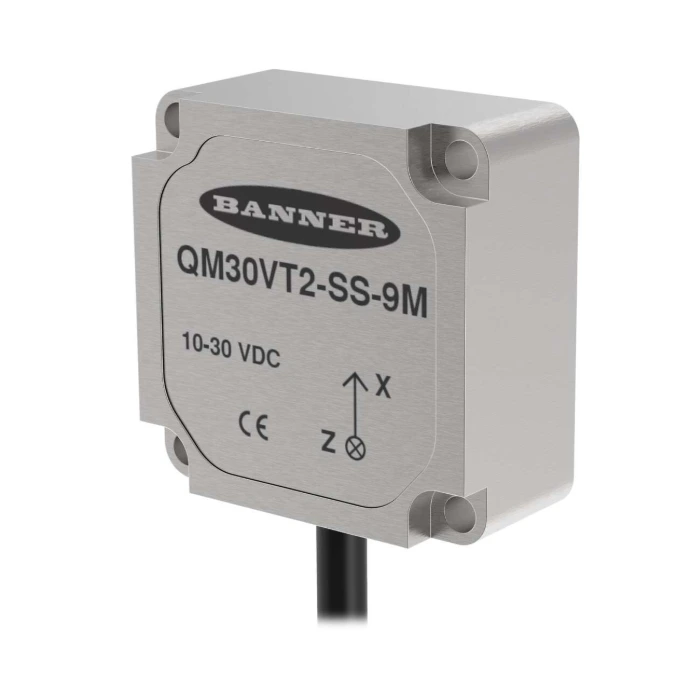
QM30VT2-SS-9M
Type: Wired vibration sensor
Details:
The QM30VT2-SS-9M measures machine vibration and temperature in one unit. Its stainless steel housing suits industrial use, and RS485 communication with Modbus RTU provides data for condition monitoring.
Key points:
- A single sensor measures vibration and temperature.
- The stainless steel housing is intended for industrial environments.
- Data is transmitted over RS485 using Modbus RTU.
- Measurements support machinery condition checks.
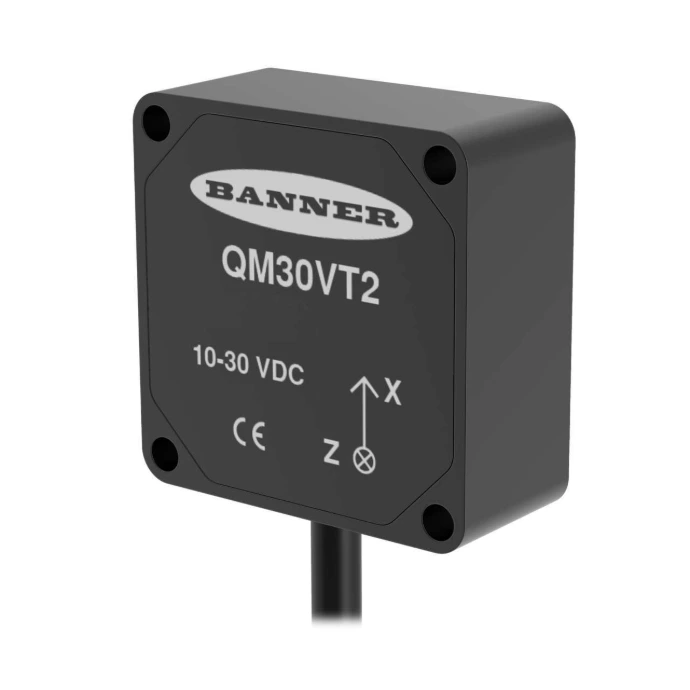
QM30VT2-QP
Type: Wired vibration sensor
Details:
The compact QM30VT2-QP measures machine vibration and temperature. It uses an M12 connector and RS485 with Modbus RTU to send data to a condition-monitoring system.
Key points:
- The sensor measures machine vibration and temperature.
- Its compact size accommodates installation on machinery.
- An M12 connector provides the sensor connection.
- Readings are available over RS485 and Modbus RTU.
QM30VT3-MQP
Type: Wired vibration sensor
Details:
The QM30VT3-MQP measures machine vibration to track changes in operating condition. It is intended for factories implementing wired condition monitoring.
Key points:
- The sensor measures machine vibration.
- Measurements can be used in automation and machinery monitoring.
- Wired connectivity supports fixed industrial installations.
- Vibration readings help identify changes that warrant inspection.
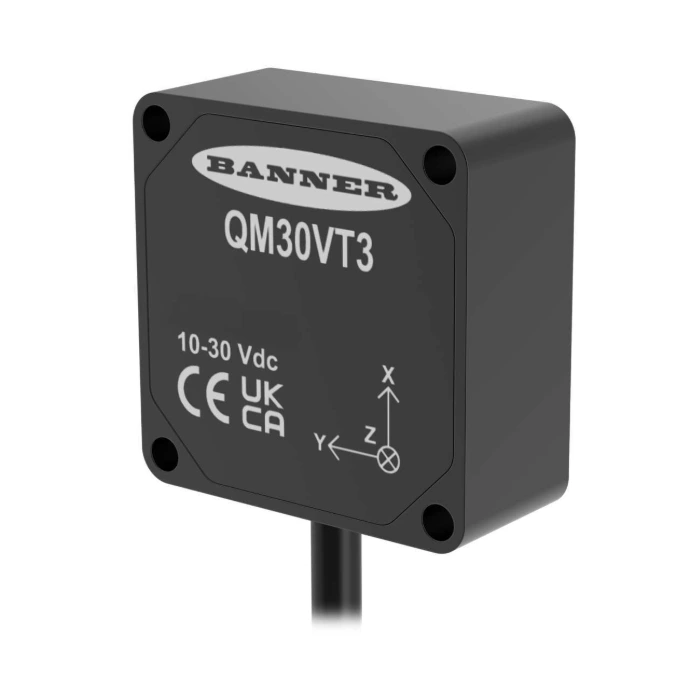
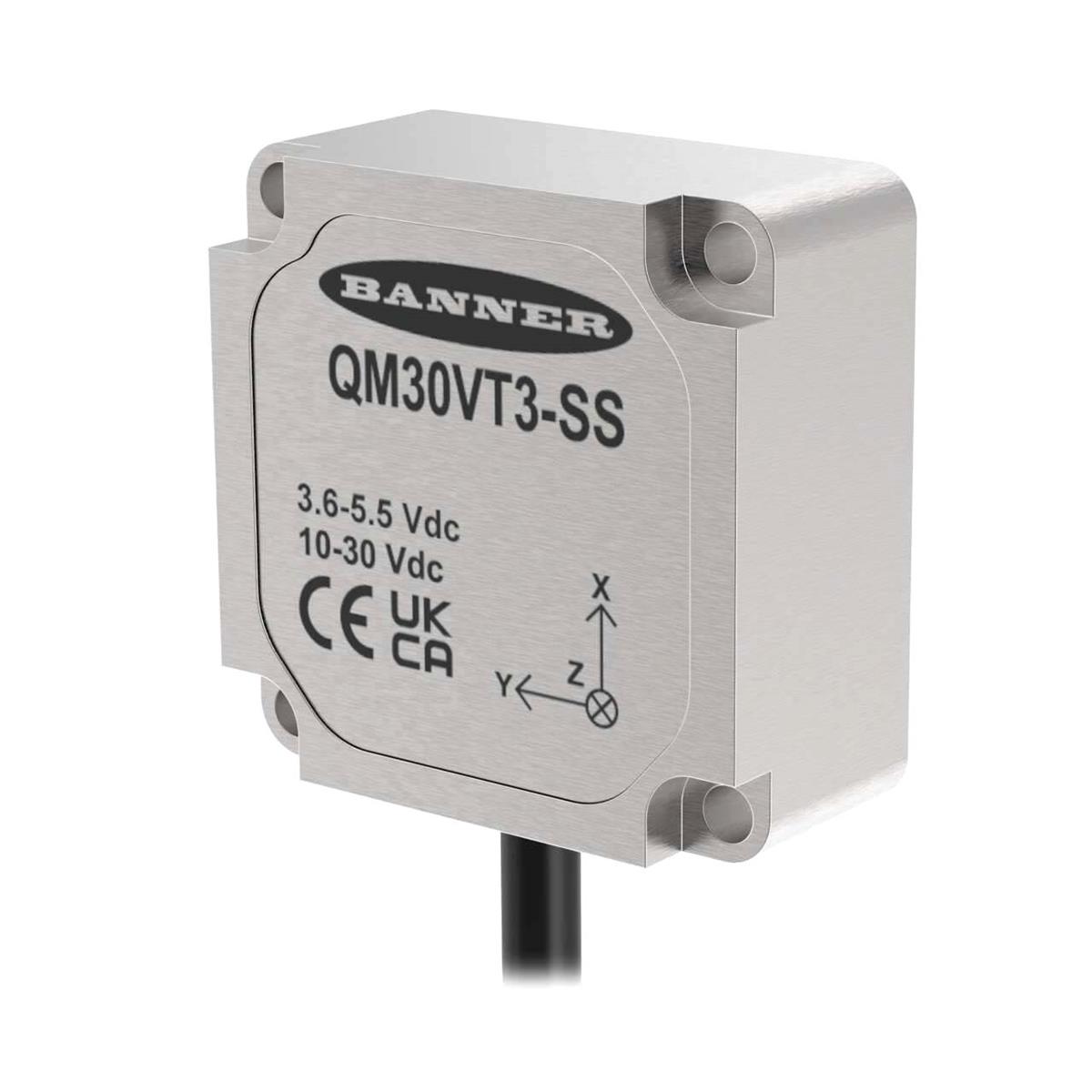
QM30VT3-SS-MQP
Type: Wired vibration sensor
Details:
The QM30VT3-SS-MQP uses a stainless steel housing for industrial vibration measurement. Its readings help technicians track operating conditions and investigate unusual machine behaviour.
Key points:
- The stainless steel housing is intended for industrial environments.
- The construction is intended for industrial use.
- Measurements support condition checks before maintenance planning.
- The sensor tracks machine vibration.
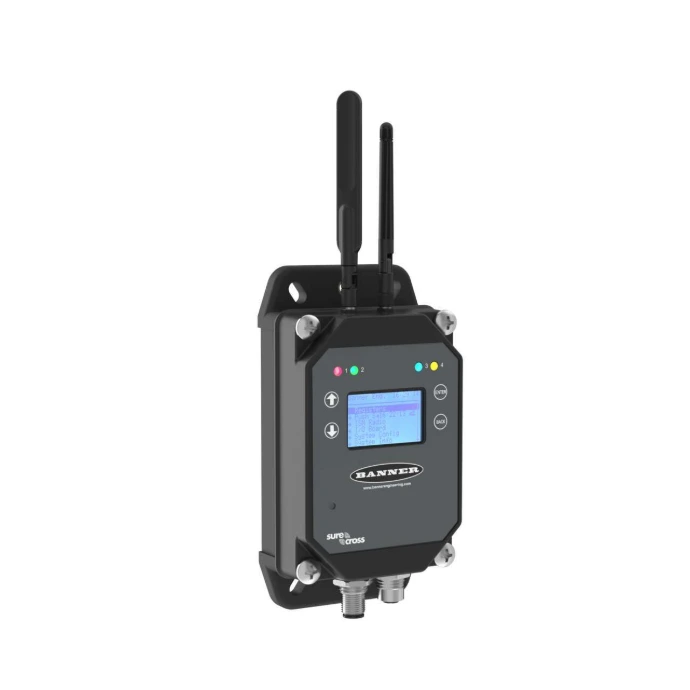
DXM1200-B2R4
Type: Wireless sensor controller
Details:
The DXM1200-B2R4 receives data from wireless vibration sensors and forwards it to a central system. It collects readings from multiple points without a separate cable run from every sensor to the control cabinet.
Key points:
- The device receives readings from wireless vibration sensors.
- Readings from multiple points can be brought into one system.
- Data can be forwarded to a dashboard or central system.
- Wireless reception reduces the need for cabling from each measurement point.