
A chiller using less electricity is not necessarily operating more efficiently; it may simply be delivering less cooling. Before proposing a saving measure, define what is measured and compare operation under relevant load conditions. This gives the facilities team a useful starting point for an engineering review.
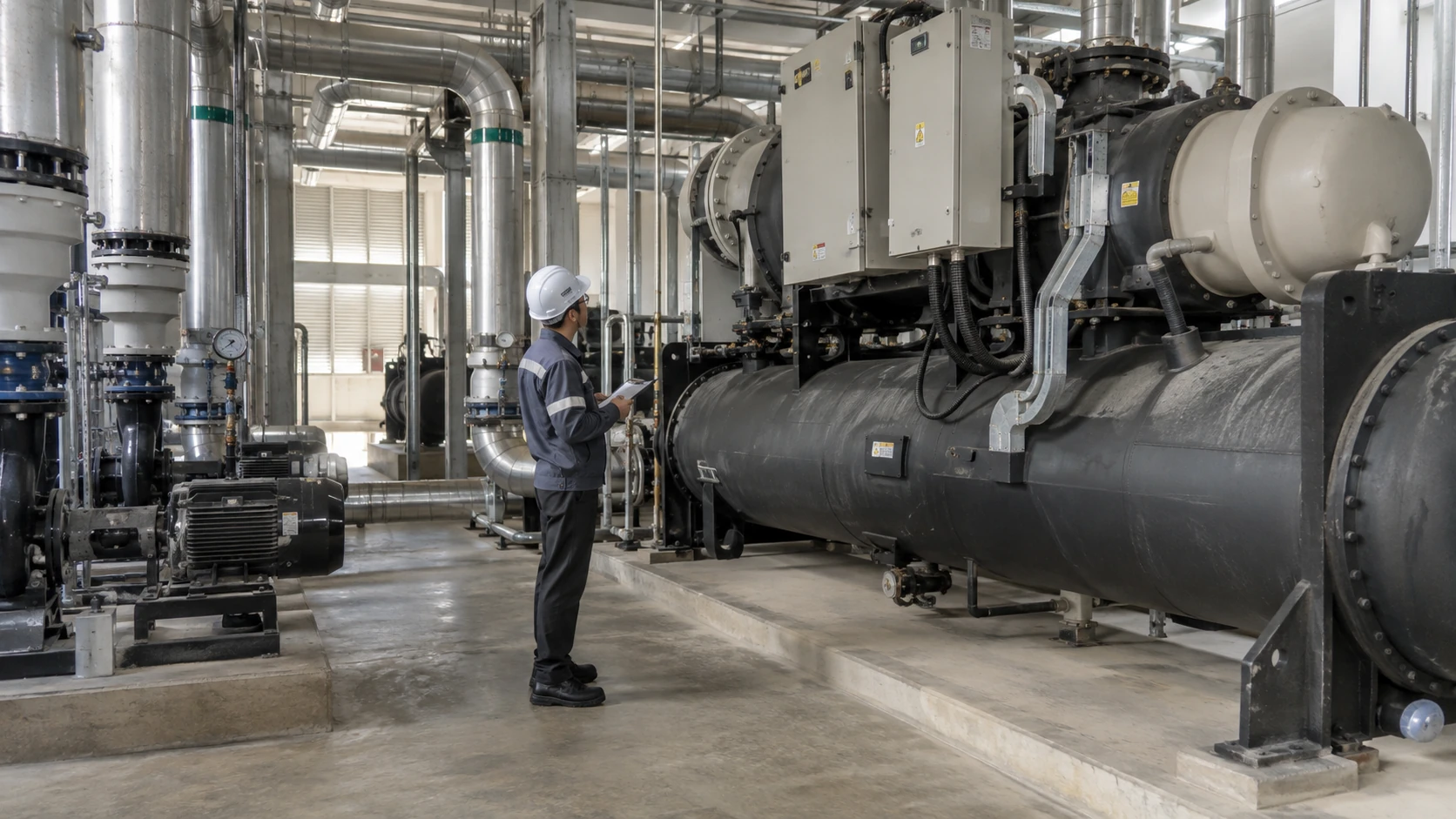
Agree whether the comparison covers a machine or a plant
A cooling plant includes interacting equipment. DOE guidance recommends considering the system configuration and load rather than assessing an equipment upgrade in isolation.
Draw the measurement boundary
State whether electrical readings cover the chiller alone or also the pumps, cooling tower and other auxiliaries.
Record what was operating
Keep equipment status, run hours and the number of machines serving the building during the comparison.
Sources: [2]
Compare electricity with cooling delivered
Chiller efficiency can be expressed as electrical power per unit of cooling, such as kW per refrigeration ton. Interpret values at comparable loads and conditions; a rated full-load value is not a universal field target.
Align the readings
Use electrical power and cooling-output data from the same period and agreed boundary.
Verify the additional measurement
If cooling output is not available, have an engineer assess the required flow and temperature measurements; electricity alone cannot establish it.
Sources: [1]
Use a defined comparison to test an approved measure
Choose a comparison method and retain the conditions that affect the result. Monitoring should support a specific investigation or operating decision, with a person responsible for reviewing the outcome.
Illustrative assessment
After approved maintenance, compare suitable load periods and record building use, weather and plant configuration.
Keep limitations visible
Identify missing data and changed conditions before attributing the result to the measure or extending it to other equipment.
Sources: [3]
Frequently asked questions
Can a monthly electricity bill reveal chiller efficiency?
Not by itself. It may combine many loads and does not show the cooling delivered by the chiller.
Does BEMS automatically optimize the chiller?
DigitechX BEMS provides building energy data and comparisons. Additional thermal measurements and automatic chiller control require a separate assessment.
Review the building energy data available today
Explore DigitechX BEMS building, floor and meter comparisons. Use the existing point list to identify useful coverage and any additional data needed for a chiller assessment.
Click to view details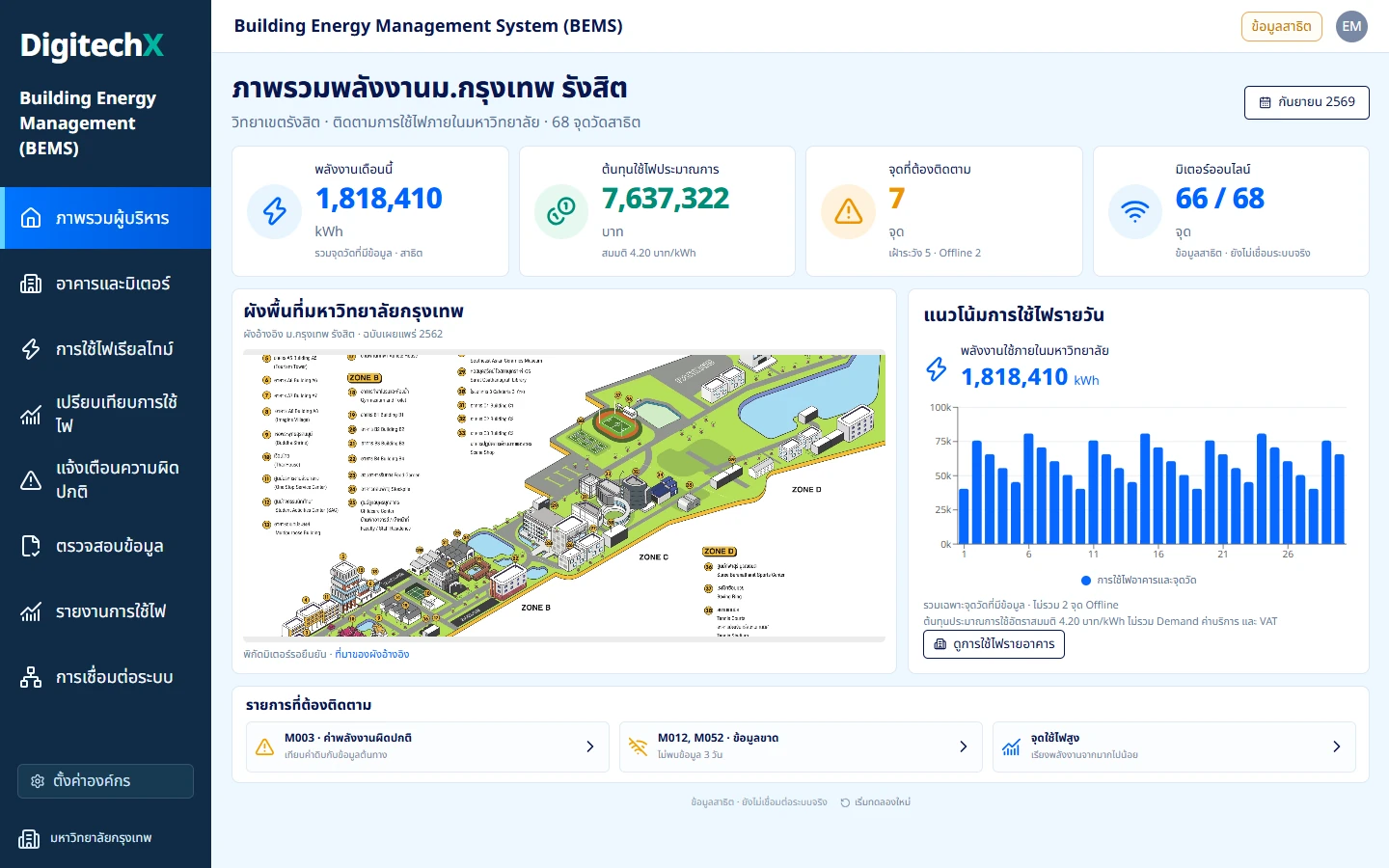
References
- U.S. DOE FEMP: Purchasing Energy-Efficient Electric Chillers
- U.S. DOE Building Energy Asset Score: Chiller Upgrade Guide
- DOE 50001 Ready: Monitoring and Measurement of Energy Performance Improvement
Information and sources reviewed: 8 October 2026