
Cold chain means maintaining the required temperature conditions through handling, storage and transport. In a warehouse, a room-temperature chart alone cannot show which lots were exposed. The useful record links the measurement location and time to the stock present there.
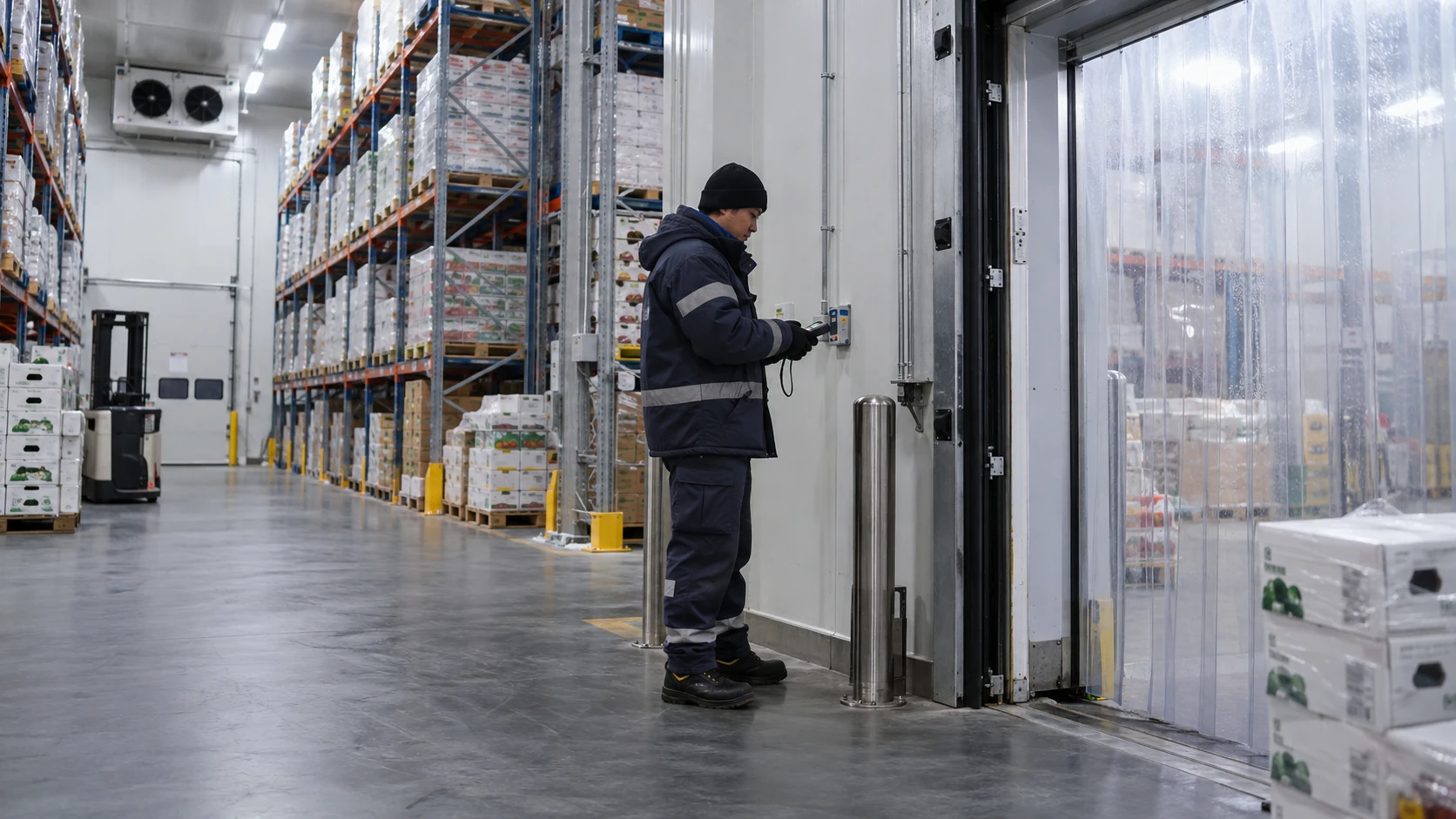
1. Give each reading a location and context
Define monitoring points for the actual storage layout and product requirements. Air readings and product-temperature checks answer different questions; one should not silently replace the other.
Measurement record
Keep the sensor identity, zone, timestamp, unit and relevant calibration or verification record. Make missing readings visible.
Operating events
Record movements and relevant events such as loading, door opening or defrosting when investigating a change. Confirm the cause rather than inferring it from the graph.
Sources: [1]
2. Connect lots with their time in each zone
Lot traceability depends on movement events as well as labels. Receiving, transfers and dispatch need consistent identities and times.
Stock record
Retain product, lot, owner, quantity and location, with entry and exit times for each relevant zone.
Illustrative check
If an excursion occurs during loading, identify the lots present during that period. A lot moved out earlier should not be included merely because it used the same room.
Sources: [2]
3. Review an exception before releasing stock
Use the warehouse quality procedure and product requirements to decide the next step. A software alert identifies a condition for review; it does not certify that goods remain acceptable.
Preserve the event
Keep the duration, measurement point, readings and any additional product checks with the affected stock records.
Record the decision
The authorized reviewer should document the disposition and evidence. Retain the dispatch and recipient link for subsequent traceability.
Frequently asked questions
Can one temperature limit cover every product?
No. Limits and response procedures depend on the product, customer requirements and applicable controls. Agree them before configuring monitoring.
Does adding a sensor complete cold-chain traceability?
No. Temperature history must be linked to lot identities, locations and movements so the relevant goods can be identified.
Explore WMS Cold Chain
See how DigitechX relates warehouse stock, lots and movements to temperature context. Start with one product and one storage-to-loading route to define the required workflow.
Click to view details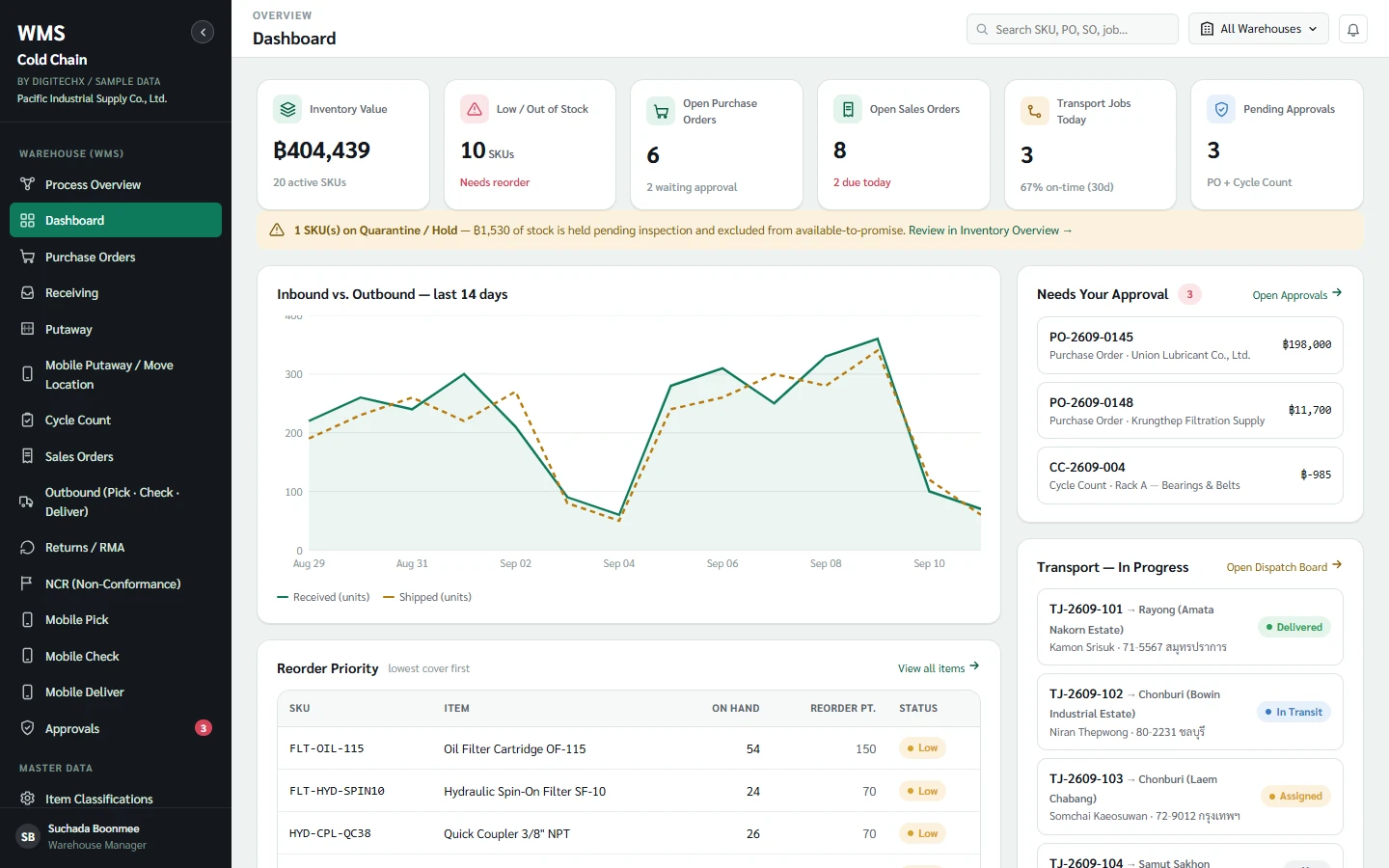
References
Information and sources reviewed: 8 October 2026