
Machine builders considering artificial intelligence (AI) should first ask which task their existing data can support, such as condition review or investigating stopped periods. NIST’s 2026 roadmap identifies challenges in data management, integration across different systems and reliable operation. Verify this foundation before selecting an AI model.

1. Define the data delivered with the machine
Prepare a signal register with controls engineers and the people who will use the information. Recipients need to understand what each value means under different operating states.
Describe each signal
Record machine and point identifiers, units, sampling frequency, timestamps and timezone. Define running, stopped and missing-data states.
Agree access and purpose
Obtain customer authorisation for data types, recipients and intended use. Identify the destination system and ownership of connection support before deployment.
Sources: [1]
2. Test records against physical operation
NIST’s manufacturing test-bed work examines data collection, curation and reuse. For a machine builder, start by comparing received values with events the operator can confirm.
Include imperfect conditions
Test startup, shutdown and loss of connection. Mark unavailable readings explicitly rather than silently substituting zero values.
Check continuity
Investigate timestamp differences, duplicate records and identifier changes after equipment replacement. Retain known events to support later verification.
Sources: [2]
3. Build on a task that already works
Begin with a report or condition-review process whose result users can check. Then assess what an AI capability would add to that decision compared with the existing method.
Establish evaluation evidence
Measure data completeness and human review time. When an abnormal event occurs, retain specialist-confirmed findings as supporting evidence.
Define the AI trial
Specify the intended decision, error measure, human reviewer and conditions for stopping reliance on trial output before including it in a customer service.
Sources: [1]
Frequently asked questions
Must every reading come from the PLC?
No. Required values and available equipment determine the approach. Controller data or additional sensors may be suitable after checking models, communication methods and permissions.
What should the first pilot deliver?
Provide a verified signal register, sample records with data-quality states and one useful customer report. Any AI capability requires its own defined scope and evaluation.
Start with verifiable condition-monitoring data
Explore DigitechX Condition Monitoring with the machine model, signal list and intended service to assess connection and verification requirements.
Click to view details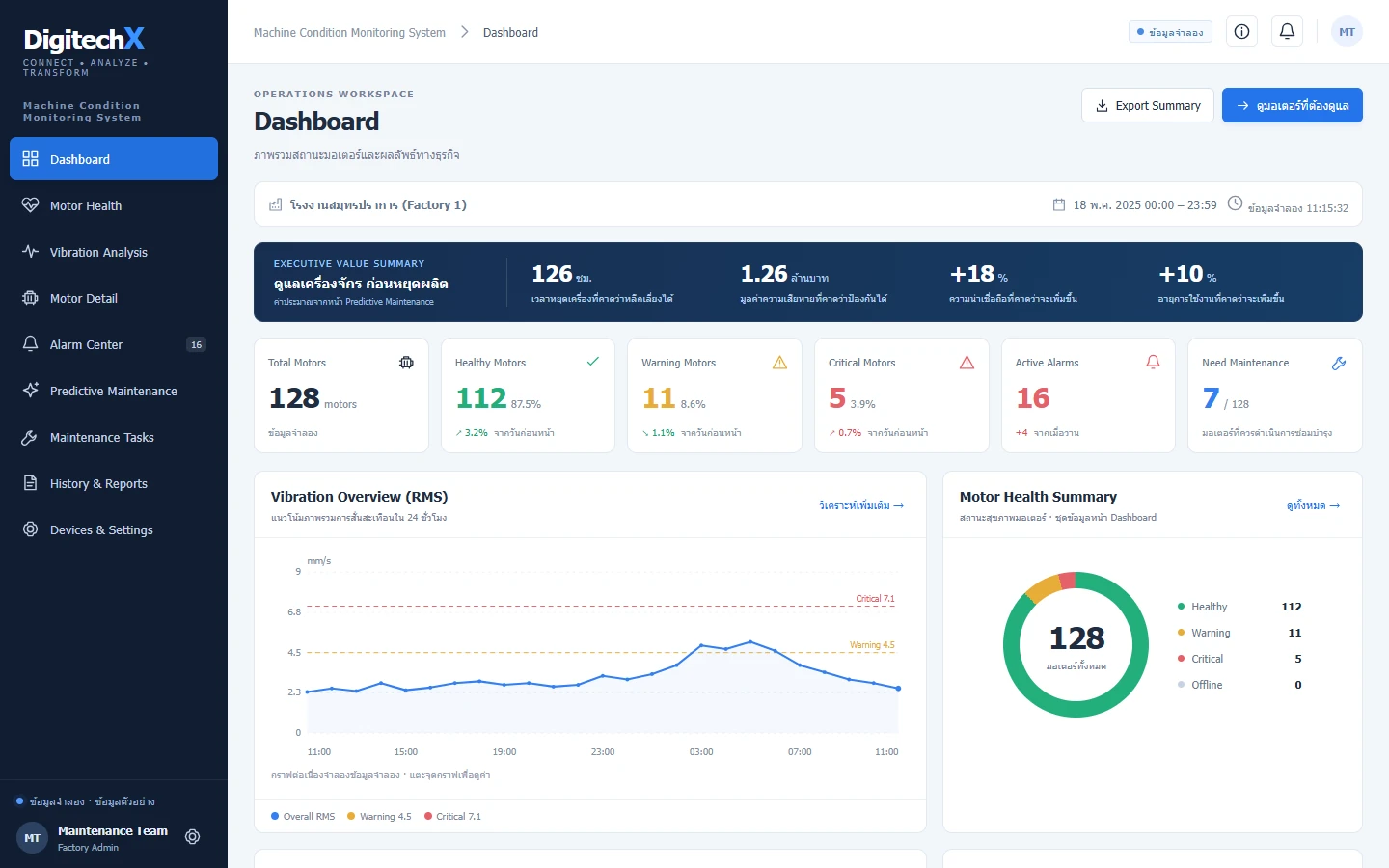
References
- 2026 Roadmap on Artificial Intelligence and Machine Learning for Smart Manufacturing
- Connecting, Deploying, and Using the Smart Manufacturing Systems Test Bed
Information and sources reviewed: 9 October 2026