
Predictive maintenance uses equipment-condition evidence to support maintenance decisions before failure. Condition monitoring supplies observations such as vibration and temperature; engineers interpret those observations alongside operating history. A useful first project starts with an important machine and an achievable response workflow.
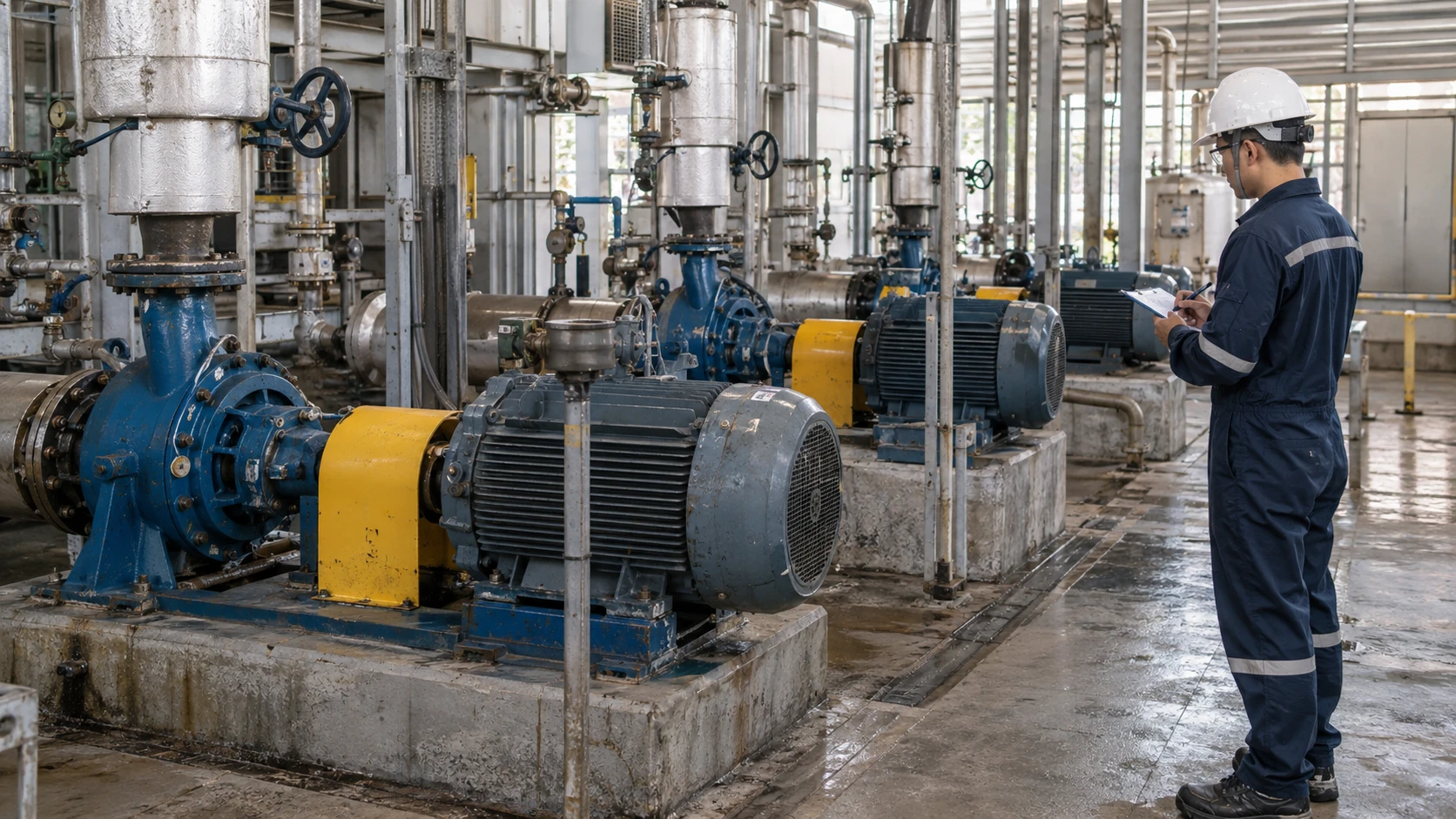
1. Choose by impact, not simply motor size
Ask production and maintenance staff what happens when each candidate stops. An inexpensive pump with no replacement may matter more than a larger motor with effective standby equipment.
Operational consequence
Record the affected process, available redundancy, repair access and typical time to obtain parts. Include relevant safety or quality consequences.
Useful history
Prefer a candidate with identifiable failures or recurring inspection concerns. Retain maintenance dates and operating conditions to interpret subsequent trends.
2. Decide which evidence answers the question
Select measurement methods for the failure modes and equipment involved. Installing a vibration sensor does not mean every developing fault will be detected.
Measurement plan
Agree points, directions, readings and sampling requirements with the responsible specialist. Collect a reference under known operating conditions.
Data ownership
Assign who checks missing data and who reviews a change. Keep the machine identifier consistent between readings and maintenance records.
Sources: [1]
3. Define the action before the first alert
A pilot needs a route from detection to review, inspection and follow-up. Otherwise a dashboard can accumulate unresolved alerts without improving maintenance decisions.
Response workflow
Specify who receives an alert, what evidence they need and who authorizes inspection or shutdown under the site procedure.
Pilot review
Measure data completeness, review time and inspections with recorded findings. Compare results with the previous process before expanding.
Frequently asked questions
Must every machine have permanent sensors?
No. Select permanent or periodic monitoring according to criticality, fault development, safe access and the available maintenance resources.
Will the system predict the exact failure date?
Not from a trend alone. Prediction quality depends on the equipment, measurements and validated analysis. Use the evidence to support specialist decisions.
Explore machine condition monitoring
DigitechX connects vibration and temperature trends with machine history and service follow-up. Bring one candidate machine and its maintenance record to discuss a focused trial.
Click to view details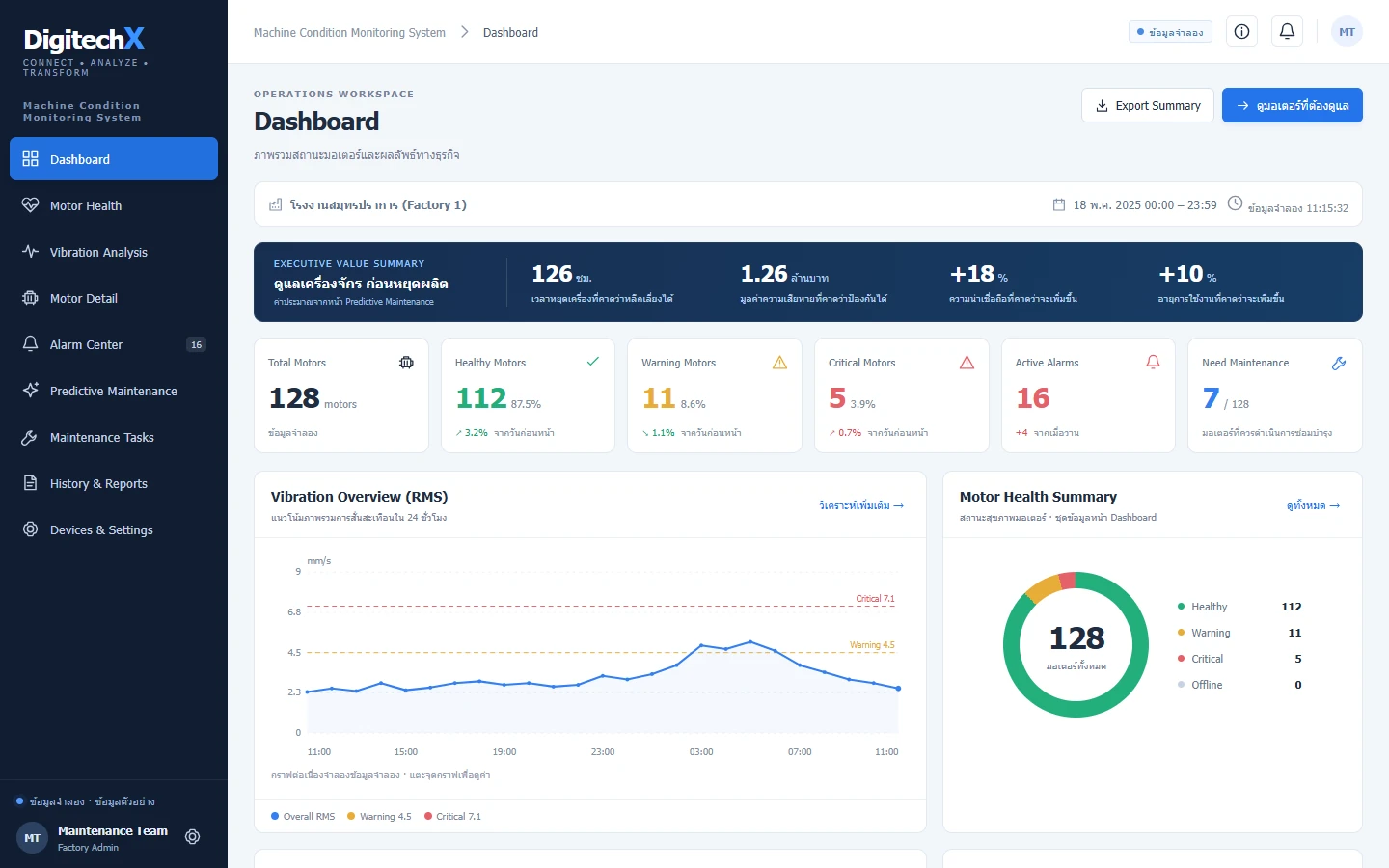
References
- U.S. DOE: Operations & Maintenance Best Practices Guide, chapters 5–6
- Fluke: Online Condition Monitoring FAQ
Information and sources reviewed: 8 October 2026