
Making better use of factory solar starts with when electricity is generated and when it is needed. Identify work that can move without compromising quality, safety or the production plan. A small scheduling trial can then inform whether further equipment is needed.

1. Align generation and consumption time
Australian government guidance explains the principle of using electricity during solar generation; 2026 PV reporting also emphasizes supply timing. A factory must apply its own site data and tariffs.
Define measurement boundaries
Confirm whether each meter measures generation, total consumption or grid imports. Identify other energy sources or storage before interpreting the relationship between the readings.
Separate working and non-working days
Use complete records from the same intervals to identify available solar and active work. A monthly total alone does not show whether generation and demand coincide.
2. Select work that can actually move
Production and technical staff should identify flexible activities together, considering process requirements and delivery schedules rather than energy use in isolation.
Start with a separable load
Material preparation or a support task may be candidates if production staff confirm flexibility. Record operating duration and the conditions that must remain unchanged.
Check combined effects
Moving several tasks together may increase peak demand. Review demand charges, the applicable tariff and equipment constraints before assuming that a higher solar-use share means a lower bill.
3. Test energy and production outcomes
Choose a comparable trial period and retain production quantities, operating hours and weather context. This helps distinguish scheduling effects from unrelated changes.
Measure the change
Review solar used on site, grid purchases and costs under the actual billing structure. Check product quality and delivery performance alongside the energy measures.
Keep operating approval clear
Monitoring data supports production decisions. A data-viewing system does not imply machine control; any control requirement needs a separate assessment of the intended operation.
Frequently asked questions
Which activity should be tested first?
Choose a small, separable task with an owner and confirmed scheduling flexibility. Avoid starting with a process that cannot safely stop or move.
What should count as a successful trial?
Review on-site solar use, grid purchases and costs alongside output, quality and delivery. Increased solar consumption alone is not a complete result.
Explore generation and energy-use information by site
Review DigitechX Multi-Site Solar Monitoring, then bring meter boundaries and production schedules to assess which records are ready for comparison.
Click to view details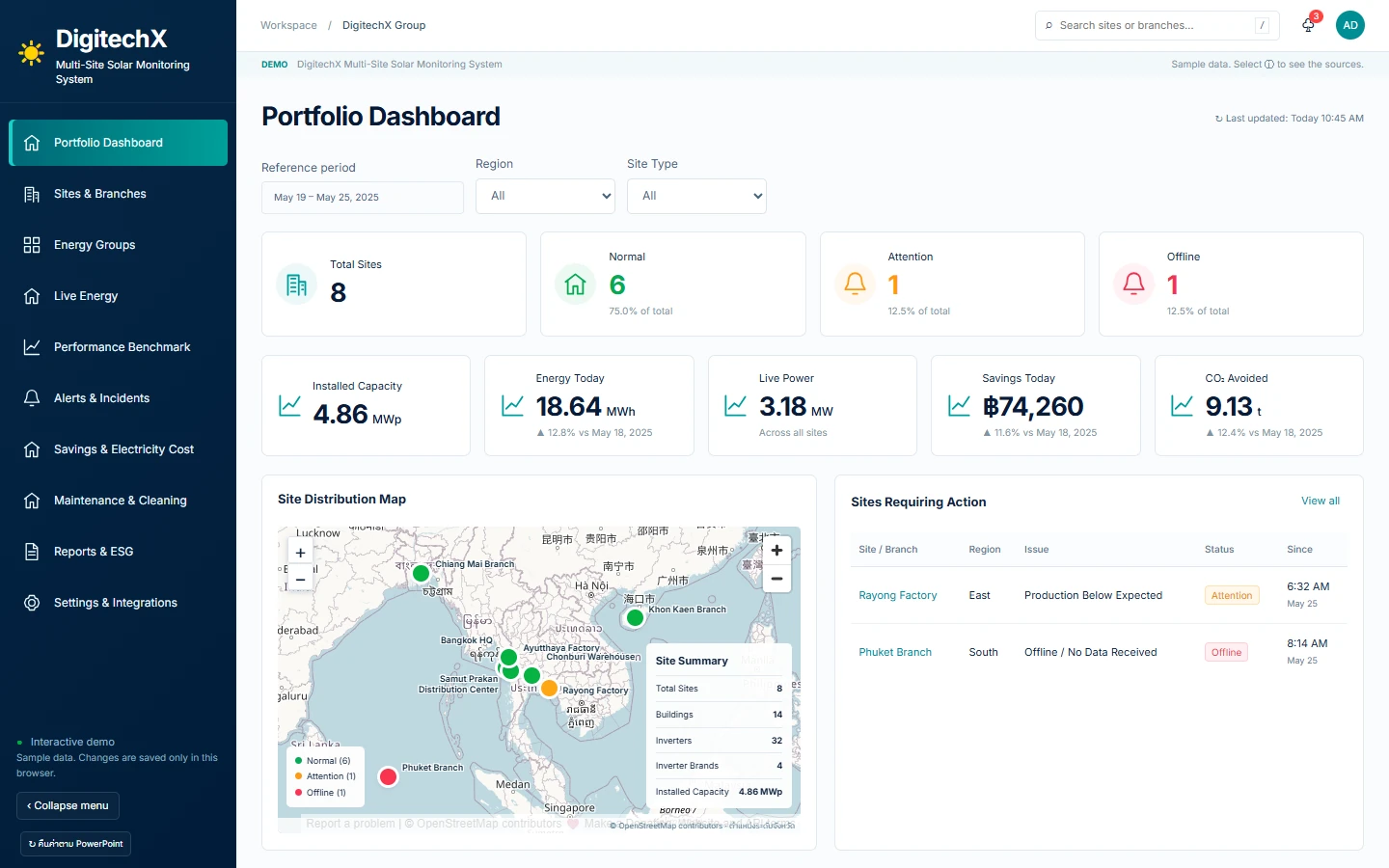
References
Information and sources reviewed: 9 October 2026