
Changing a solar operator or monitoring platform should not mean rebuilding the site’s history. Agree a handover pack and reviewer before the previous service ends. This can reduce repeated surveys, document searches and re-entry of information that already exists.

1. Define what must be transferred
IEA PVPS’s 2026 digitalisation report emphasizes standardized, interoperable data. Apply that principle to a handover list the incoming operator can actually interpret and use.
Registers and history
List site, equipment and meter identifiers, current drawings, service history and available data periods. Identify who owns each dataset and where it is stored.
Unfinished work
Transfer open incidents, planned tasks and site-access restrictions with responsible contacts. Make ongoing obligations visible while the operating organization changes.
2. Test the transfer before the change date
Do not wait until the last day to discover unreadable files or mismatched device names. Agree a sample and acceptance criteria together.
Confirm data meaning
Check units, timezone, interval length and device identifiers, including how missing records are marked. An unknown value should not silently become zero during import.
Test authorized access
Have the appropriate owner confirm incoming-user permissions and API restrictions. Verify the actual import and export methods supported by each platform.
3. Complete the handover with evidence
Agree the data cut-off, owners of missing items and a post-transition review period. Everyone should know which responsibilities remain open after the change.
Compare a sample
Select one site and period to compare record counts, events and document access before and after transfer. Record the differences requiring correction.
Review former access
After confirming that the incoming operator can work, have the system owner amend or revoke unnecessary access under company procedures while preserving the required history.
Frequently asked questions
When should preparation begin?
Allow time before service expiry to test files, permissions and sample records. The actual lead time depends on site count and contractual requirements.
Which historic records matter first?
Start with generation, events, equipment and work history used for decisions. Agree retention periods with the data owner and relevant obligations.
Explore multi-site solar data consolidation
Bring the platform list and an authorized sample dataset to DigitechX to assess handover, data connections and access separated by site owner.
Click to view details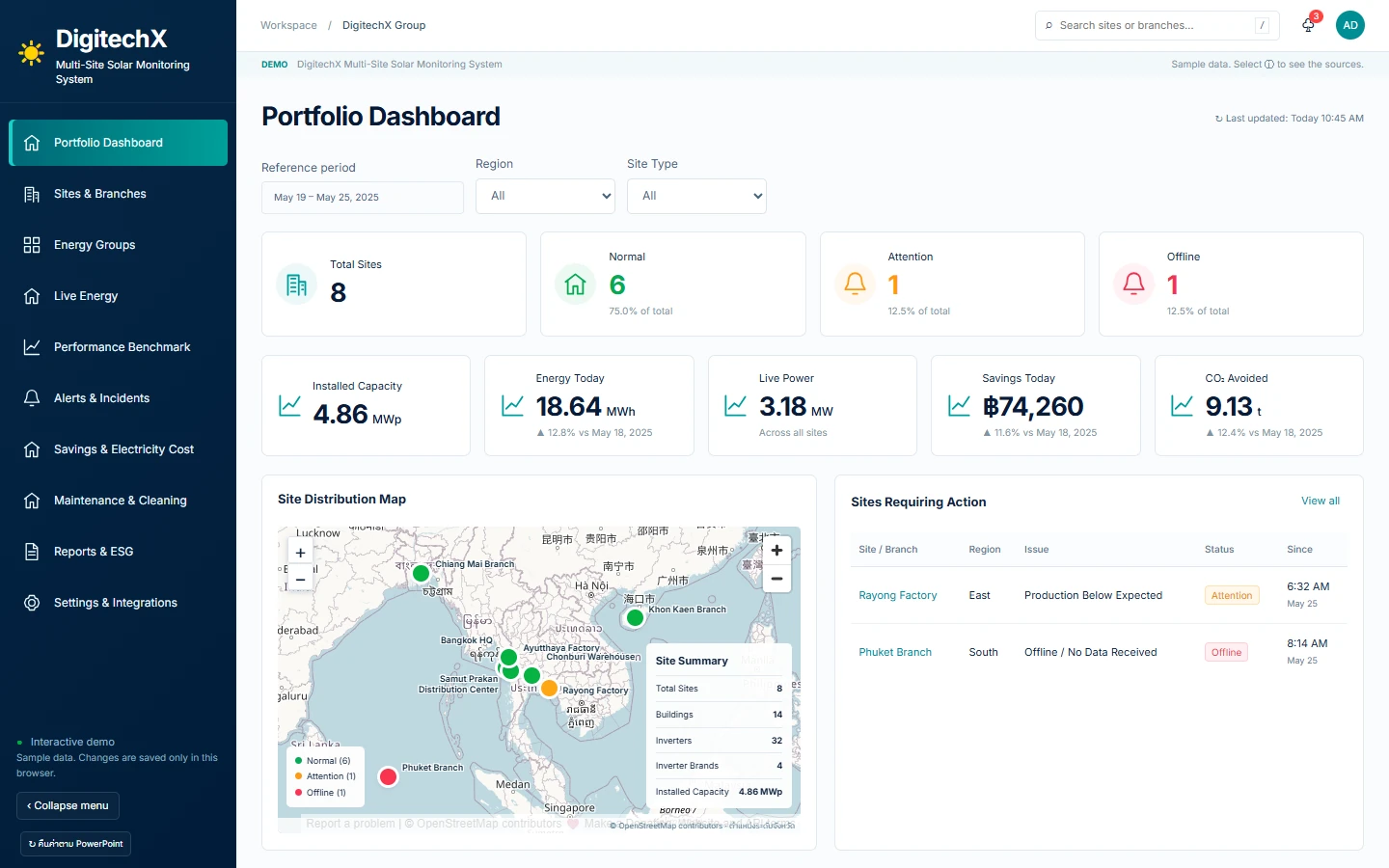
References
- Digitalisation and Digital Twins in Photovoltaic Systems
- Best Practices for Operation and Maintenance of Photovoltaic and Energy Storage Systems, Third Edition
Information and sources reviewed: 9 October 2026