
Before adding solar panels or replacing an inverter, use operating records to distinguish equipment issues, changed electricity use and site constraints. This screening helps an owner brief the engineering assessment. It avoids starting an investment decision solely from the equipment size in a supplier proposal.
1. Define the investment purpose
IEA PVPS’s June 2026 project-decisions report links technical choices with economic value. Establish the required outcome before choosing replacement or additional equipment.
Separate restoration from expansion
For restoring performance, examine the fault and repair suitability first. For additional generation, establish demand and constraints that could support the proposed increase.
Review the existing baseline
Collect generation, electricity use, outages, repair history and data-completeness records. Identify uncertainty before using the information to forecast future operation.
Sources: [1]
2. Compare options on the same basis
Compare repair, replacement, expansion and continued operation over a consistent evaluation period. Have qualified specialists examine the feasibility of each option.
Look beyond equipment price
Include installation, downtime, relevant inspections and approvals, associated system work and ongoing care. Verify actual site requirements instead of using a generic cost allowance as fact.
Check constraints first
Ask engineers to review roof, electrical, compatibility and connection conditions, together with asset-owner and contract restrictions. Monitoring graphs cannot replace engineering design.
3. Prepare a detailed assessment brief
The 2026 PV trends report gives greater attention to the timing and location of generation. Each proposal should therefore reflect how its site actually uses energy.
Supply comparable inputs
Provide the same data period, current drawings, tariff and usage assumptions, and unresolved questions to the designer and budget reviewer.
Agree post-investment verification
Decide how results will be compared while accounting for weather and operating changes. Preserve a clear equipment history after any modification.
Sources: [2]
Frequently asked questions
How much historic data should be prepared?
Cover relevant operating patterns and seasons. Ask the designer whether important periods or events remain missing before treating the record as sufficient.
Who should review the proposal?
Include the site owner, assessing engineer, solar operator and budget or contract reviewer so technical and business constraints are considered together.
Review multi-site solar data before an investment study
Use generation, consumption and status records in DigitechX Multi-Site Solar Monitoring as supporting inputs for a qualified assessment.
Click to view details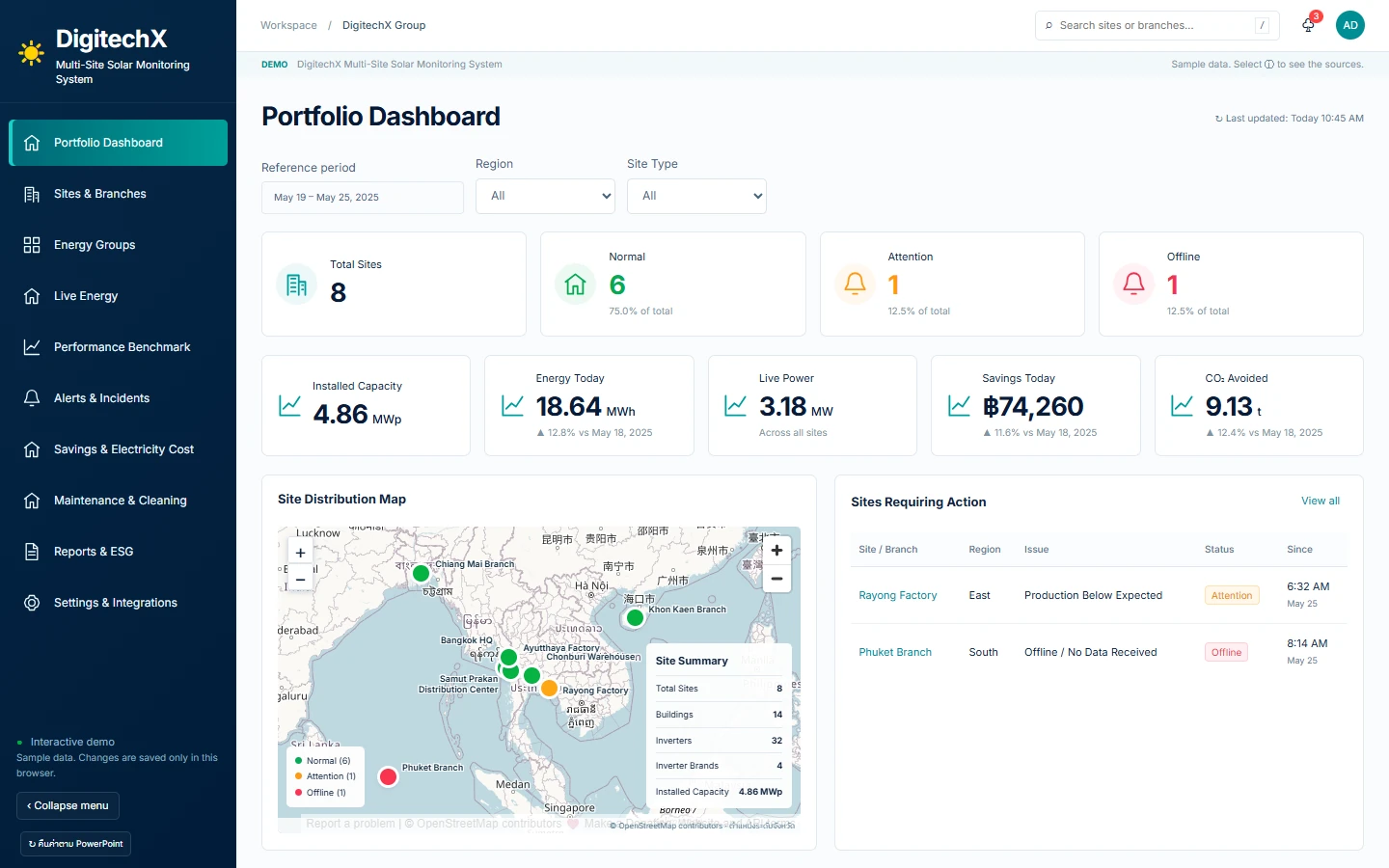
References
- Photovoltaic Project Decisions: Quality, Performance, and Economic Value
- IEA PVPS Trends in Photovoltaic Applications 2026
Information and sources reviewed: 9 October 2026