
An empty solar chart and an inverter fault are different observations. Some communication events can occur while equipment continues operating, depending on the model. Record what the screen actually shows, then check five points before deciding who should investigate.
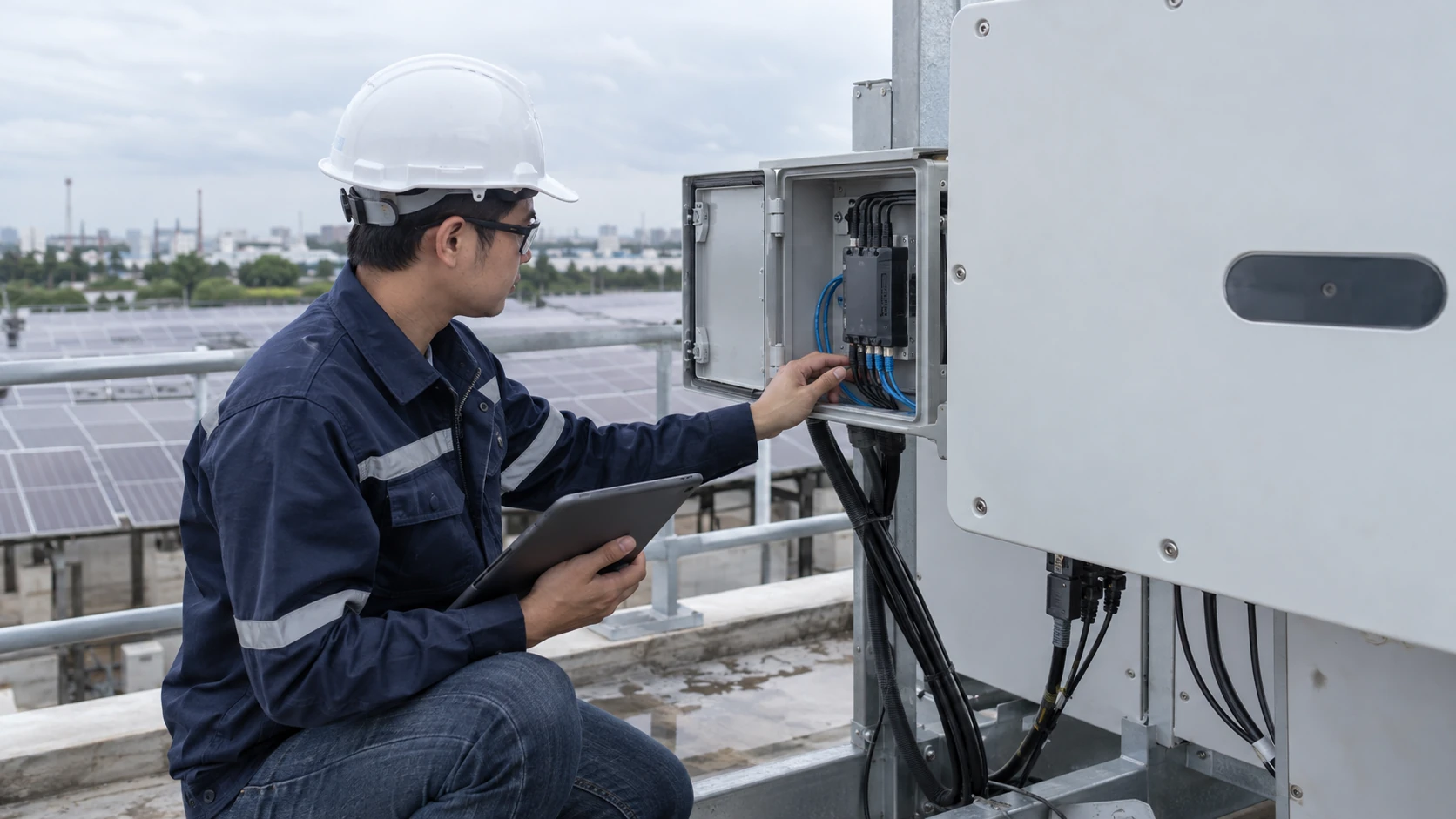
Identify the time, message and comparison record
Begin with read-only observations that can be shared with the service team.
1. Last update
Check the latest timestamp and selected reporting range. Distinguish an old value from a current measurement of zero.
2. Message source
Record the equipment model, exact event code and time. Interpret the code using that model’s manual, rather than a generic alarm list.
3. Independent record
Where authorized, compare the relevant meter or local equipment record for the same period. Note whether neighboring devices also stopped reporting.
Separate the communication path from actual operation
A device can stop reporting for reasons that require a different response from a confirmed electrical trip.
4. Data connection
Check reported logger, network and interface status, including access changes or service interruptions. Keep credentials and permissions under the site’s controls.
5. Operating events
Review known grid outages, maintenance and equipment trips against the data gap. Qualified personnel should investigate electrical faults under the site procedure.
Preserve the evidence for the right follow-up
Our suggested incident note contains the affected site, equipment, first and last known times, exact message and comparison findings. Assign a data-connection investigation or an equipment inspection according to that evidence. If the cause is still uncertain, keep it marked as unresolved.
Review recovery
When reporting resumes, check the missing period and any recovered records before publishing a complete-period total.
Sources: [2]
Frequently asked questions
Can a blank chart be recorded as zero production?
No. A missing measurement does not prove that the system produced no energy.
Should an inverter be restarted to clear every alarm?
No. Follow the model-specific instructions and qualified service advice. Repeated trips need investigation rather than repeated resets.
Review site status and history in one place
Multi-Site Solar Monitoring System consolidates generation and status across sites. Use the shared view to locate missing data and prepare evidence for the responsible service team.
Click to view details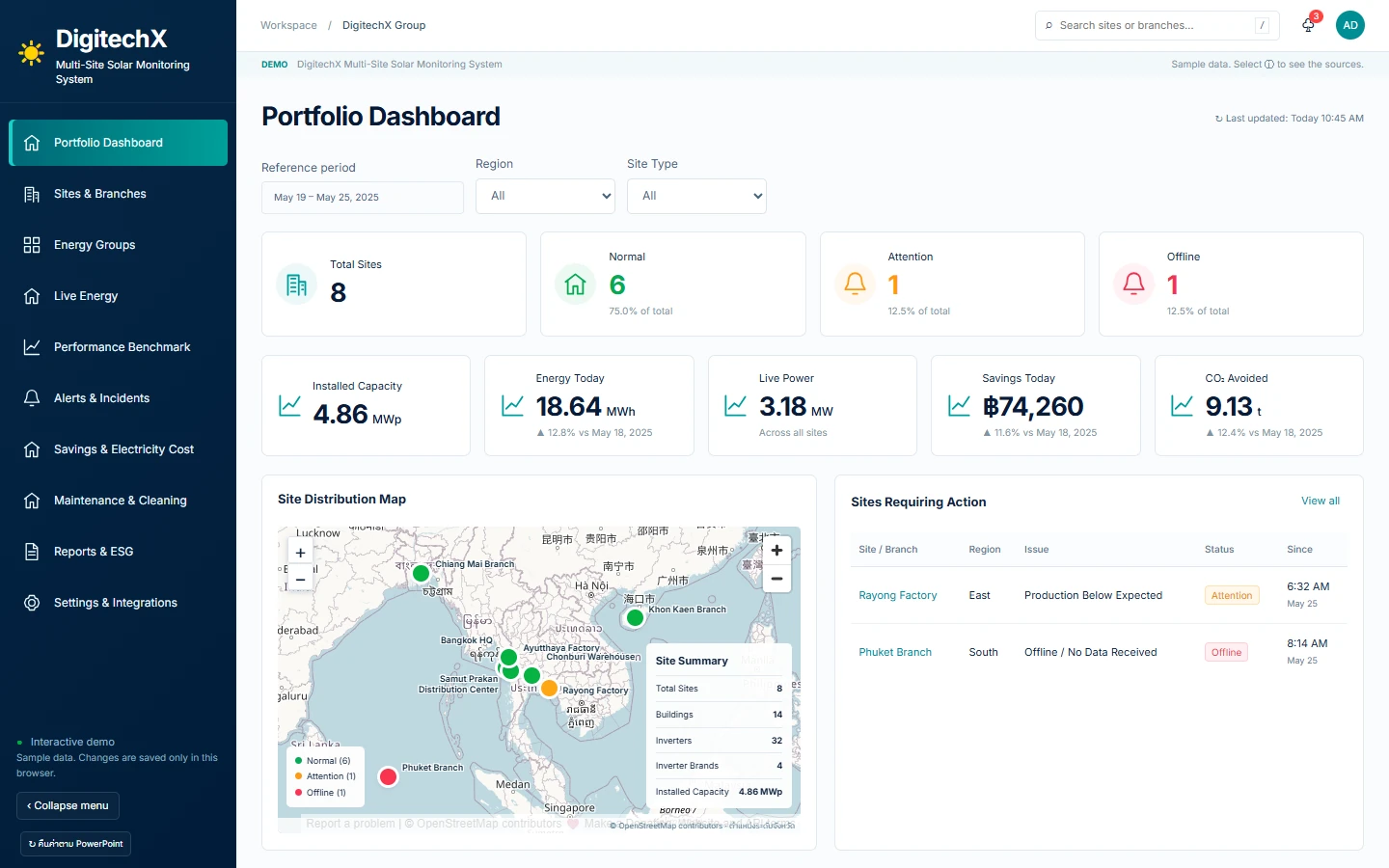
References
- SMA: Inverter event messages
- IEA PVPS: Best practice guidelines for technical and economic KPIs
- US DOE: Operate and Maintain an Existing Photovoltaic System
Information and sources reviewed: 8 October 2026