
Solar monitoring gathers generation and operating information so owners can review what a system is doing. Across several sites, a larger kWh total does not necessarily mean better performance. Agree the comparison rules before deciding which site deserves investigation.
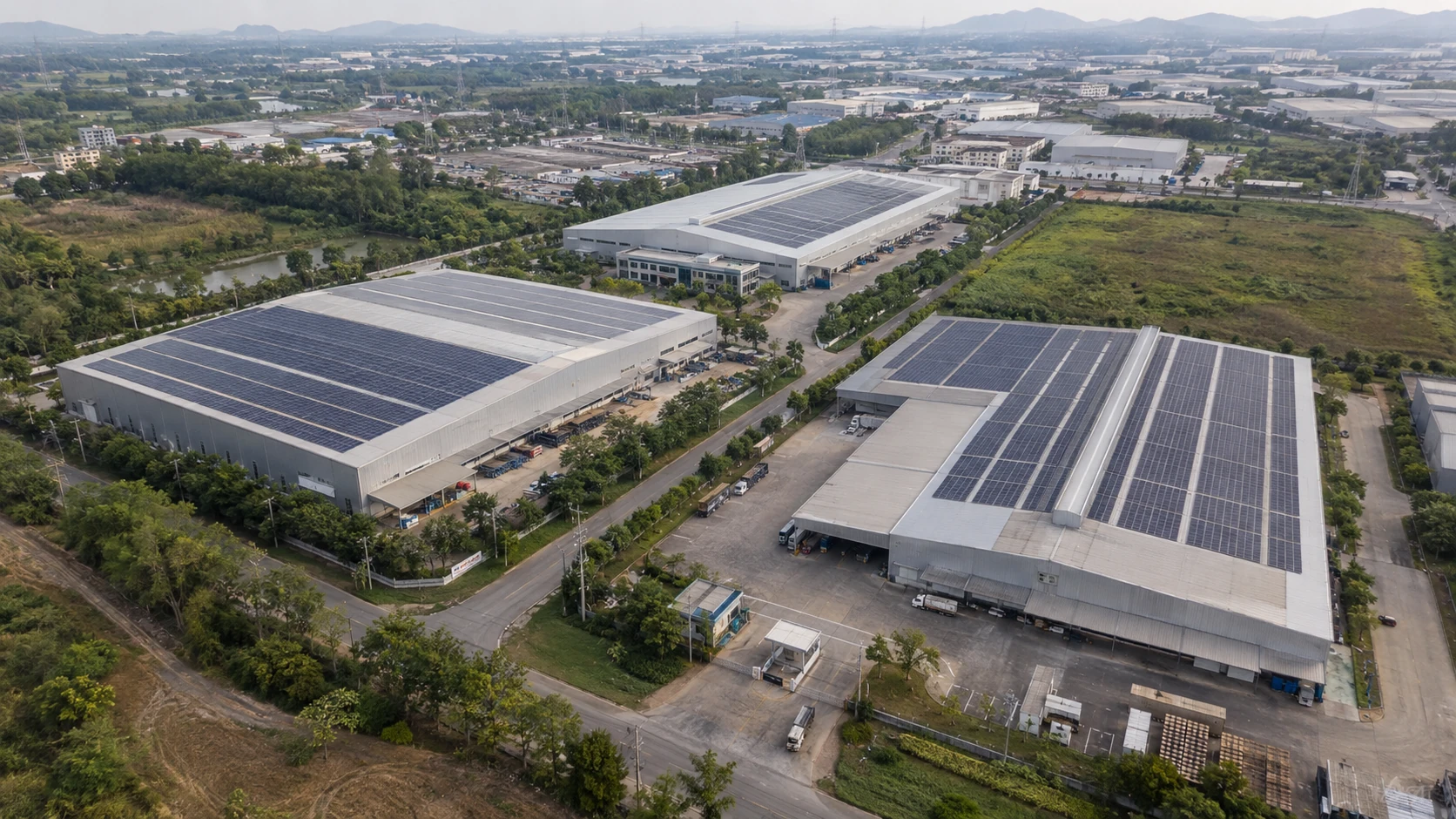
Make the capacity and time basis consistent
Start with a small comparison sheet that identifies each site and the basis used for its numbers.
Capacity basis
Specific yield divides energy by a stated installed capacity. Use a consistent capacity definition and unit when comparing sites.
Time basis
Choose the same reporting window and time zone. Check whether a newly commissioned site operated throughout that window.
Sources: [1]
Check the evidence behind a low result
Normalization helps organize the comparison, but it does not remove every difference between installations.
Conditions and configuration
Consider solar resource, orientation and known operating restrictions. A lower yield is a reason to investigate, not proof of a defect.
Completeness and source
Identify missing periods and the device supplying each record. Avoid counting the same generation twice when both a logger and another interface provide it.
Use the comparison to plan the next action
Our suggested review order is to separate stale data, confirmed outages and lower-than-expected performance. Give each issue a site, time range and responsible person. Record the evidence needed before sending a technician or changing an operating assumption.
Keep a reviewable result
Save the comparison period, inputs and explanation alongside the follow-up decision, so a later review can repeat it.
Sources: [2]
Frequently asked questions
Can two sites be ranked using kWh alone?
Only within a clearly justified comparison. Different capacities, operating periods and conditions can make a raw total misleading.
Does a low monitoring value prove the site is faulty?
No. First distinguish incomplete data and different conditions from an actual operating problem.
See Multi-Site Solar Monitoring System
DigitechX brings generation and site status into a shared view. Review comparisons with the capacity, period and data completeness visible, using authorized access to each site’s data.
Click to view details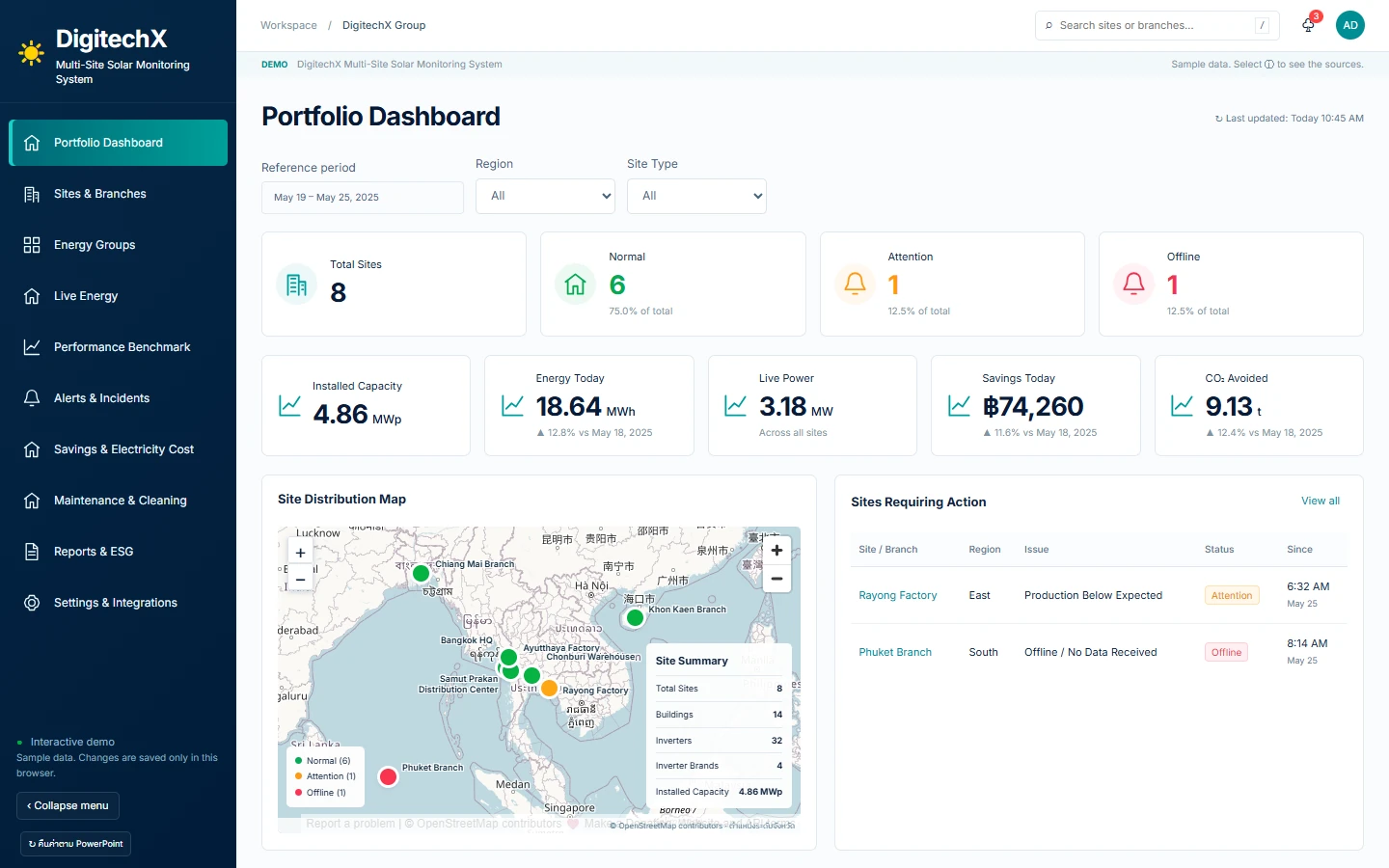
References
- IEA PVPS: Best practice guidelines for technical and economic KPIs
- IEA PVPS: Analytical Monitoring of PV Systems
Information and sources reviewed: 8 October 2026