
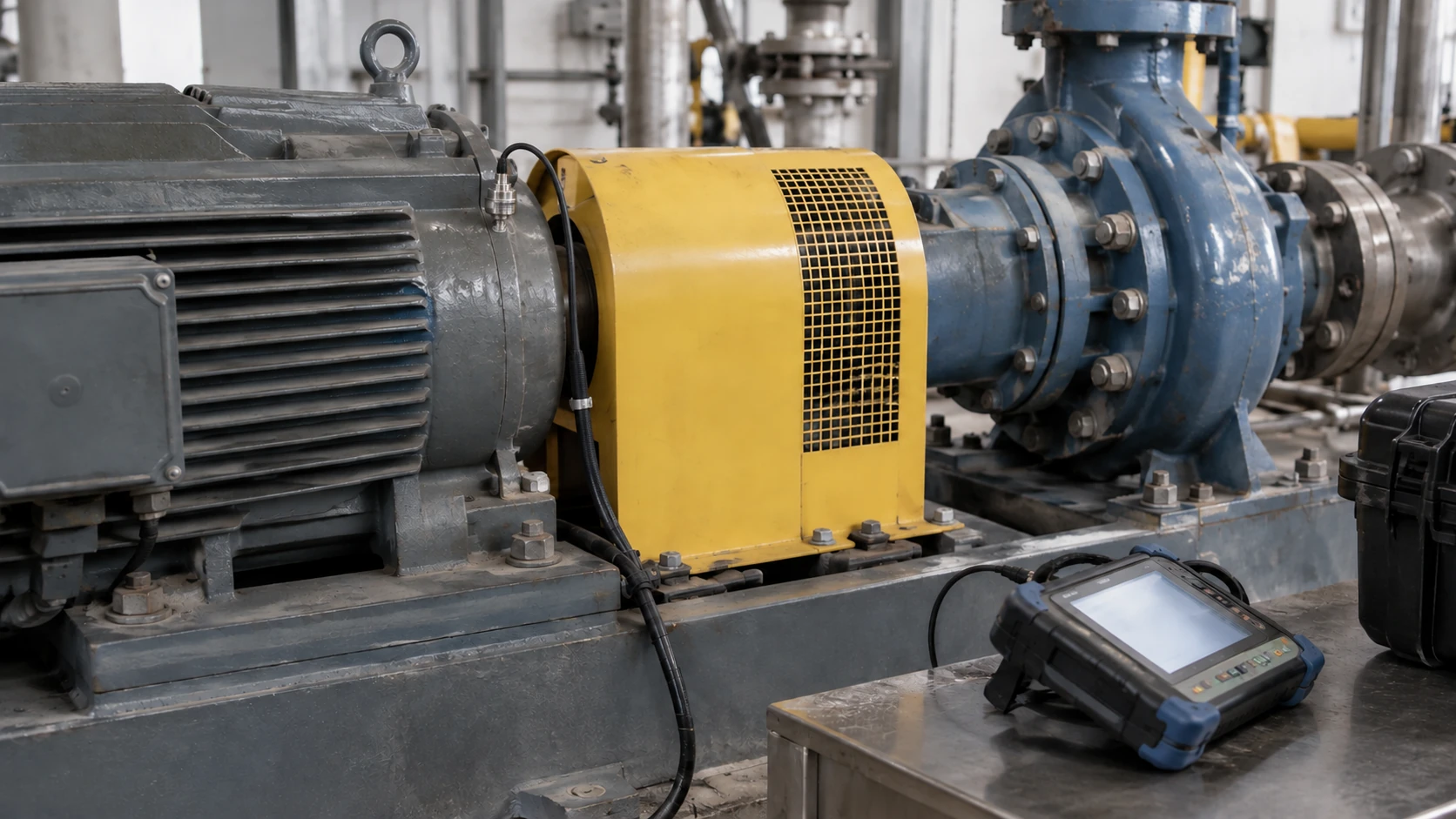
Vibration monitoring collects repeated vibration measurements to follow changes in machine condition. It is useful for motors, pumps and other rotating equipment, but a rising trend does not identify a fault by itself. Begin with the measured quantity, unit and operating conditions.
1. Know what the number represents
Different measurement types describe different aspects of motion. Read the sensor and software documentation before comparing values from separate instruments.
Velocity and acceleration
Velocity may be reported in mm/s; acceleration may be reported in m/s² or g. These are different quantities, not alternative labels for the same number.
RMS and peak
Root mean square (RMS) summarizes the signal’s effective magnitude; peak describes an extreme value. A comparison also needs a consistent measurement frequency range.
Sources: [2]
2. Compare a trend under known conditions
Use a reference recorded when the equipment condition and operating state are known. Keep measurement points and methods consistent so a change can be meaningfully reviewed.
Match the operation
Consider speed, load and whether the machine is starting or running steadily. A change in production conditions may also change vibration.
Check the record
Look for missing readings, a moved sensor or a changed setting before treating a sudden step as deterioration. Add relevant temperature and inspection observations.
Sources: [1]
3. Use monitoring to direct investigation
An overall trend helps prioritize review. Identifying the cause may require frequency analysis and inspection by someone familiar with the machine.
Record the change
Identify the machine, point and time, then compare the current trend with earlier events and maintenance dates.
Agree the response
Set review responsibility and equipment-specific criteria with the specialist. Keep findings with the event so future comparisons have context.
Sources: [1]
Frequently asked questions
What vibration value is dangerous for every motor?
There is no single threshold suitable for every motor. Applicable criteria depend on machine type, installation, measurement method and operating conditions.
Are vibration monitoring and vibration analysis the same?
Monitoring follows measurements and flags changes. Analysis investigates their meaning using suitable data and machine expertise; a simple trend may not provide enough detail.
Explore vibration trends by motor
DigitechX Vibration Monitoring shows vibration, temperature, history and reports by motor. Use the demo to assess the records your technicians need for routine review.
Click to view details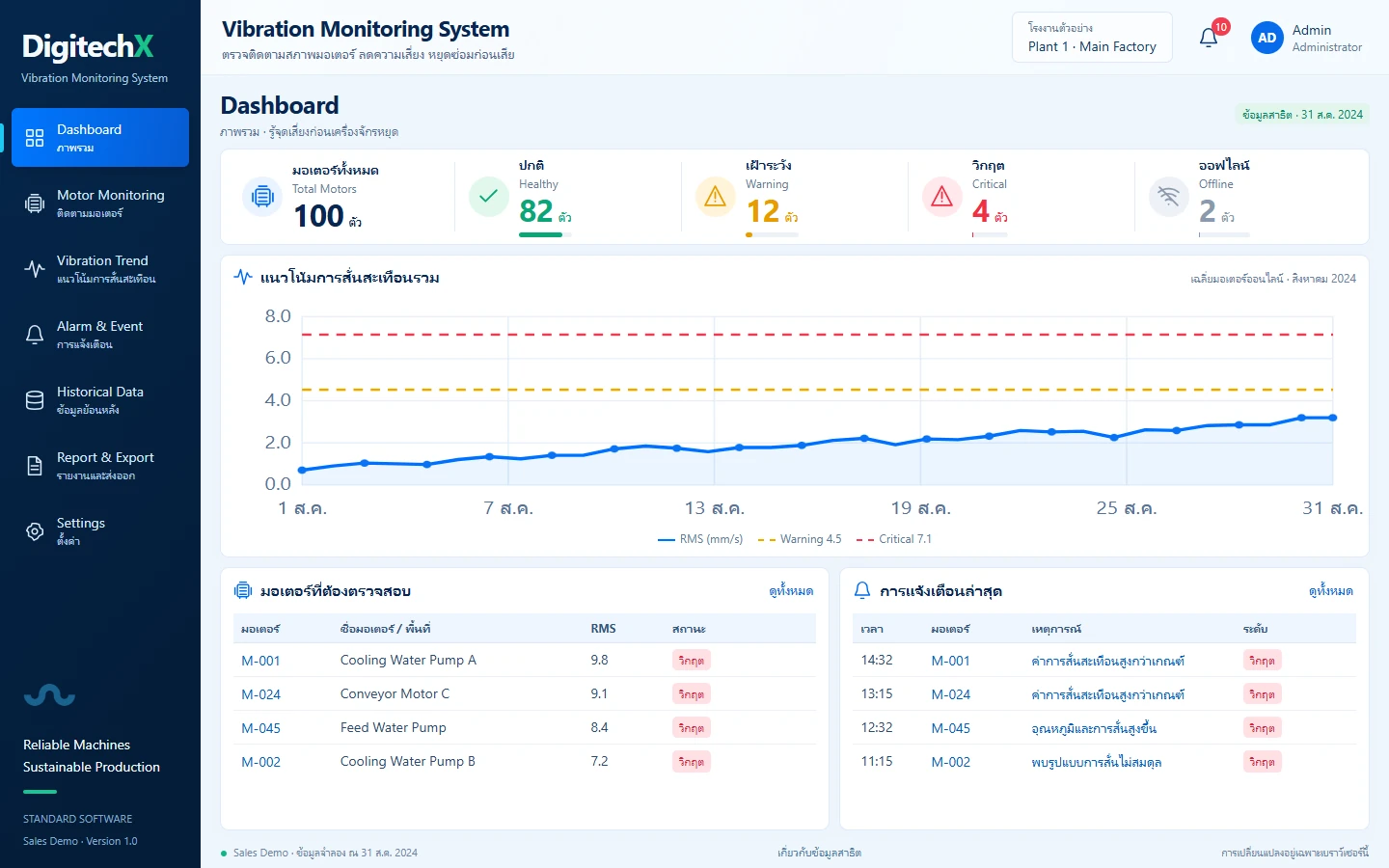
References
- U.S. DOE: Operations & Maintenance Best Practices Guide, chapters 5–6
- Fluke: Overall vibration, severity levels and crest factor plus
Information and sources reviewed: 8 October 2026