
A vibration sensor is useful only when its mounting and measurement method suit the machine and the intended investigation. Choosing a wireless connection or a dashboard first can leave these requirements unresolved. Plan the measurement, the installation and the response together.
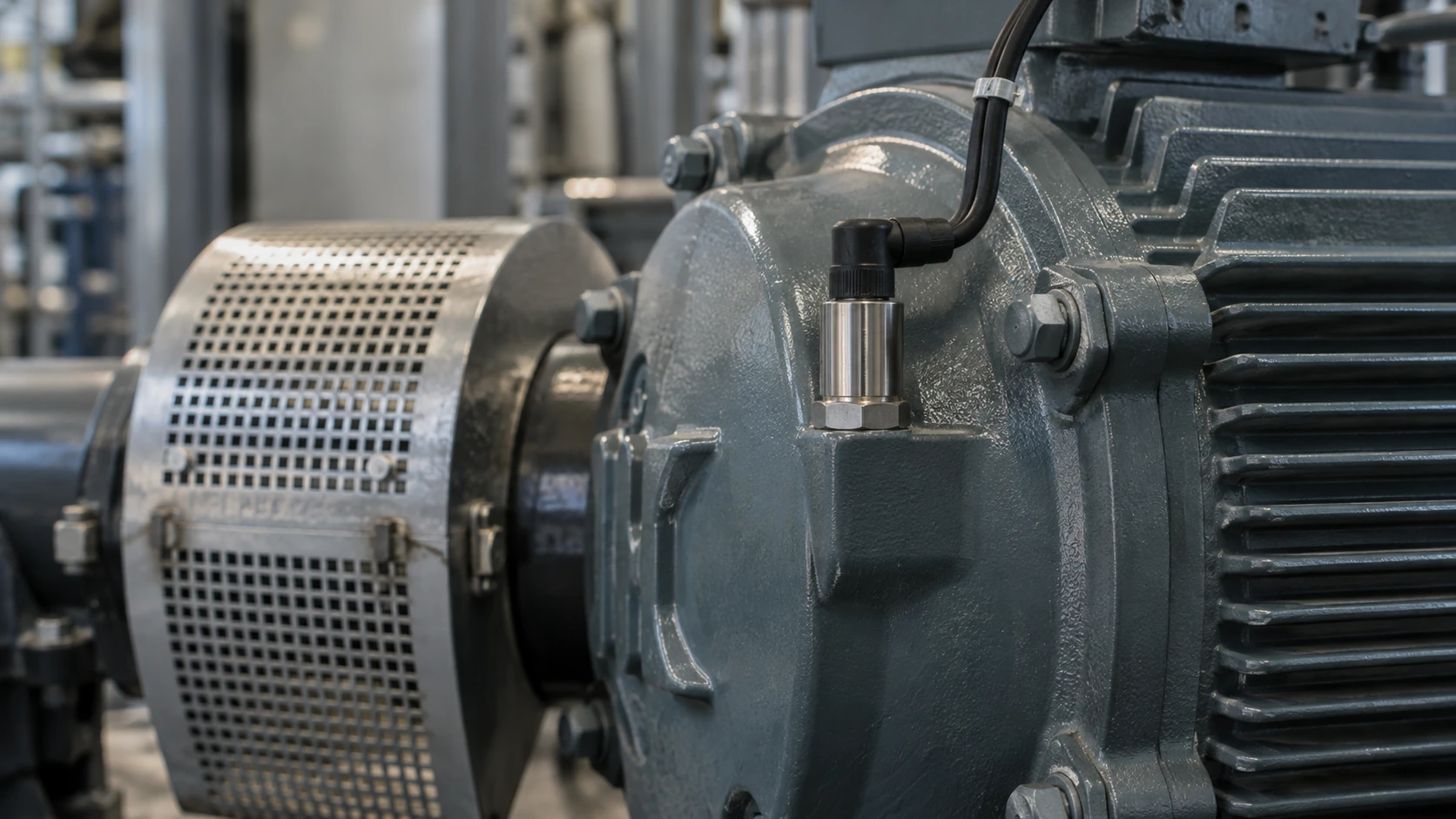
1. Define what the installation must measure
Have the machine specialist identify the relevant points and directions. Document them so later readings come from a repeatable arrangement.
Point and environment
Consider the bearing housing or another specified rigid point, safe access, temperature, moisture and any area requirements.
Range and output
Confirm the required frequency and amplitude range, sampling behavior, units and available output. An overall value alone may not provide the spectrum needed for diagnosis.
2. Check the mechanical connection
Mounting affects the usable frequency response. A loose interface or an unsuitable soft layer can alter what reaches the sensor, especially at higher frequencies.
Follow the manufacturer
Use an approved mounting method, prepared surface and specified tightening requirements. Assess adhesive or magnetic mounting against the frequencies required.
Record the installation
Retain point photographs, direction, mounting method and sensor identity. Verify readings after installation before accepting the data into a reference trend.
Sources: [1]
3. Design alerts that lead to a review
Start with known operating conditions and equipment-specific criteria. Agree what the technician should do when a threshold or trend requires attention.
Separate event types
Distinguish a machine-condition alert from offline, missing or invalid data. Loss of communication does not show that the machine is healthy or faulty.
Assign the response
Record who reviews the event, required supporting data and the findings. Revisit nuisance alerts with the specialist rather than simply raising every threshold.
Frequently asked questions
Can a sensor be mounted anywhere on the motor?
No. The point, direction and mechanical connection affect the reading. Follow the equipment and sensor requirements for the measurement being made.
Can one alarm setting be copied to every machine?
Only if a qualified review establishes that the same criteria apply. Similar appearance does not prove comparable speed, support, load or measurement conditions.
Plan the monitoring connection
DigitechX Vibration Monitoring organizes readings, trends and alert history by machine. Share the machine list and existing sensor specifications to assess the measurements and interfaces needed.
Click to view details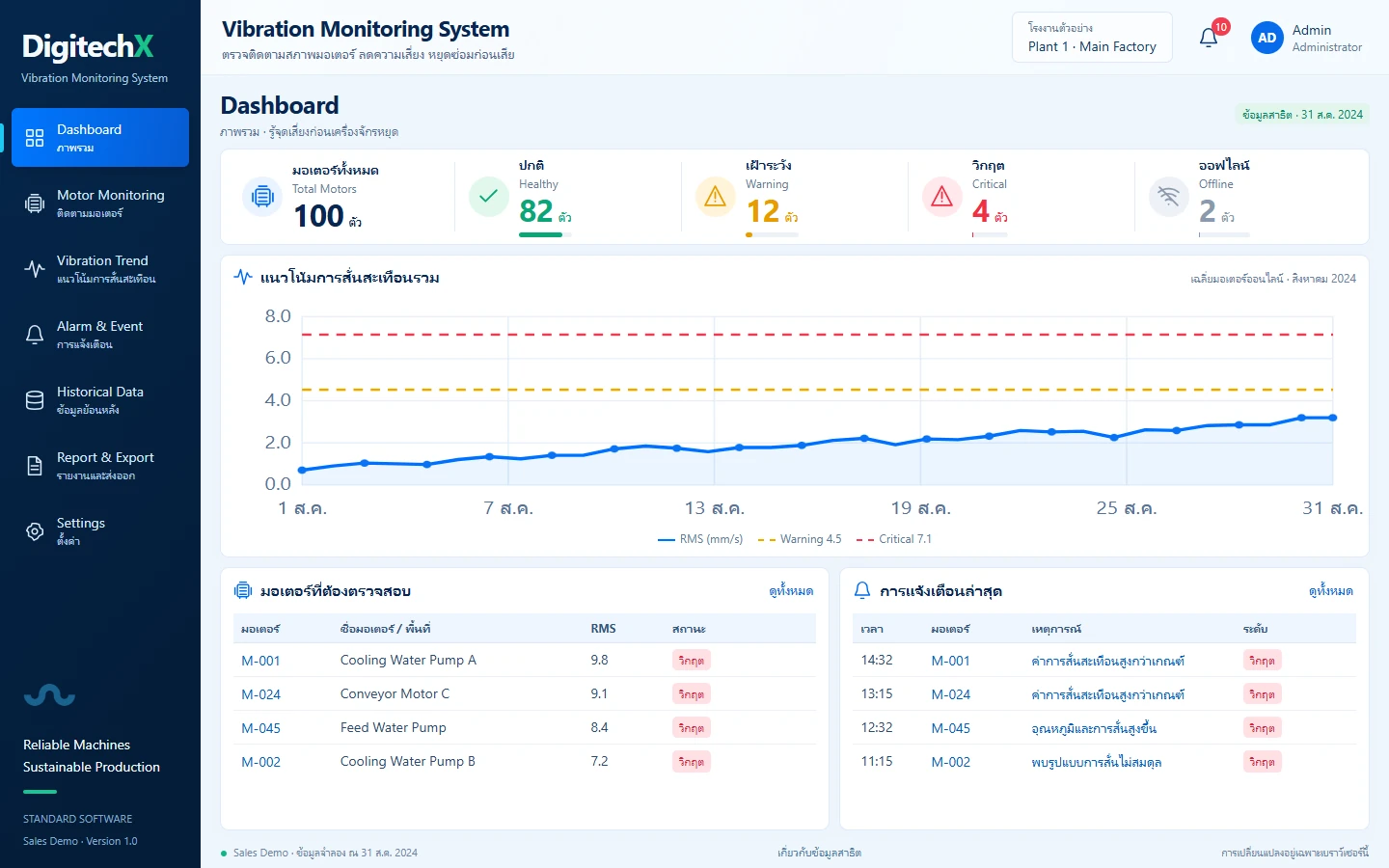
References
- PCB Piezotronics: Guidelines for Mounting Test Accelerometers
- U.S. DOE: Operations & Maintenance Best Practices Guide, chapters 5–6
- Fluke: Online Condition Monitoring FAQ
Information and sources reviewed: 8 October 2026