
As delivered machine numbers grow, service managers need to know which reviews are due, which issues remain open and who owns them. Vibration Monitoring supports this queue when readings are considered alongside equipment criticality and service history. Ranking machines by the highest reading alone is insufficient.

1. Separate data review from field work
Machine lifecycle services include both information review and physical work. A changing trend should first reach a responsible reviewer who can determine the appropriate next step.
Maintain a review queue
List the machine, customer, review interval and owner. Keep missing-data cases separate from machines with a confirmed change in measured trend.
Maintain a follow-up queue
After assessment, assign the request for more information, site inspection or continued observation. Record who owns it and when the result should be reviewed.
Sources: [1]
2. Prioritise impact and evidence
NIST’s 2026 manufacturing roadmap highlights reliable operation and data management. For an OEM service team, start with a queue containing enough context for a person to make a useful decision.
Consider machine context
Review production importance, standby equipment, operating conditions and the customer’s reported symptoms alongside the measurements.
Arrange cover for ownership
Assign a backup when the owner is unavailable. Identify items awaiting specialist advice so they are not lost when responsibility changes.
Sources: [2]
3. Measure completed reviews
A machine that sends data is not necessarily a machine receiving a complete service review. Evaluate review outcomes together with the workload per machine.
Track completion and backlog
Count machines reviewed on schedule, overdue items and issues with returned inspection findings. Acknowledged-alert counts alone do not show completion.
Expand in a small group
Once the existing queue is manageable, add a small group and compare service hours per machine. Correct data or handover problems before expanding further.
Frequently asked questions
Can the process start with technicians’ existing readings?
Yes. First check machine identifiers, measurement points, timestamps and operating conditions, then assess how the records can be imported or connected.
How can a manager judge capacity for more machines?
Combine actual review hours, overdue work and on-time completion. Allow additional investigation time appropriate to the agreed service model.
Plan service reviews around installed-machine trends
Explore DigitechX Vibration Monitoring with a machine list, inspection intervals and open-work examples to assess the data and follow-up process.
Click to view details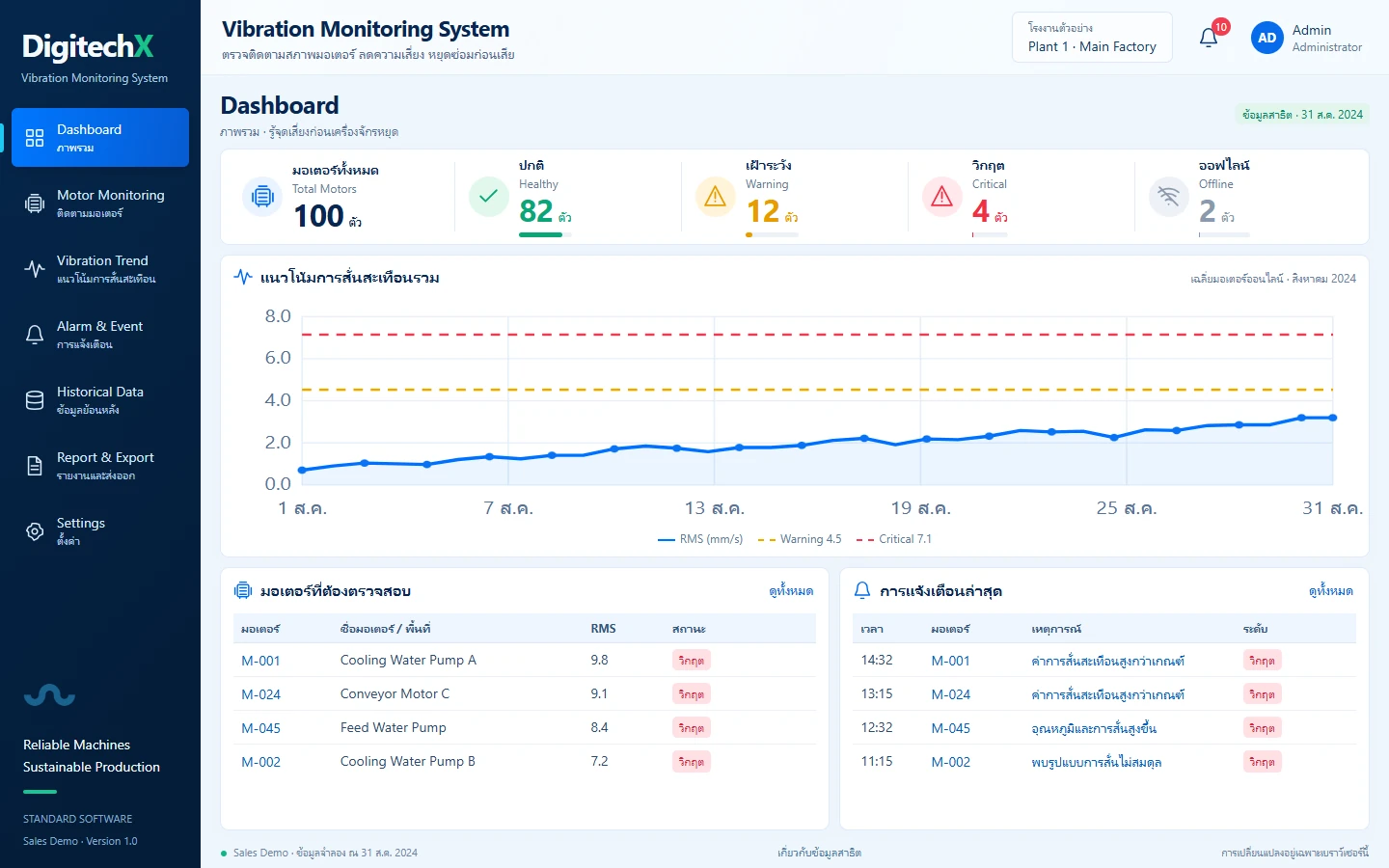
References
- Machine Lifecycle Optimization
- 2026 Roadmap on Artificial Intelligence and Machine Learning for Smart Manufacturing
Information and sources reviewed: 9 October 2026