
Stock physically present in a warehouse is not necessarily ready to dispatch. Before releasing a pick list, verify both the available quantity and the lots eligible for the order. A warehouse management system, or WMS, helps staff follow consistent records from receipt to shipment.

1. Separate on-hand from available stock
Match the product, stock owner, location and unit of measure to the order.
On-hand and reserved
Check whether stock is allocated to another order and whether that reservation remains valid.
Pending inspection or hold
Do not treat stock awaiting quality approval as dispatchable. Follow the status defined by the quality team.
An illustrative check
If 100 drums include 30 reserved and a separate 20 on quality hold, 50 remain for consideration before lot and customer eligibility checks.
2. Check that the customer can accept the lot
Traceability links product and lot identity to receipt, storage, repacking and dispatch events. A lot number without its history is insufficient.
Distribution and chemicals
Match grade, manufacturer, customer specification, QC status and required CoA. Repacked stock should remain traceable to its source lot.
Temperature-controlled storage
Check expiry, customer-required remaining life and the storage room and period. Temperature records support quality review; readings alone do not authorize release.
3. Trial one order before rolling out
Choose an order spanning several lots and follow receipt, reservation, quality review, picking and dispatch.
Include blocked cases
Test held lots, insufficient remaining life and customer-ineligible items. Check that staff see the same reason and have a correction process.
Keep the decision record
Retain approvers, status changes and movements so the team can explain which lot was shipped, to whom and on what evidence.
Frequently asked questions
Must the earliest-expiring lot always ship first?
Quality, customer and remaining-life requirements come first. Apply the chosen rotation rule, such as FEFO, only to eligible lots.
What should we prepare for a WMS discussion?
Bring sample products and lots, quality statuses, units, an order and one actual workflow, including exceptions the warehouse handles regularly.
Explore WMS for distribution warehouses
Review product, lot, document and stock-status examples against your actual receiving and dispatch workflow.
Click to view details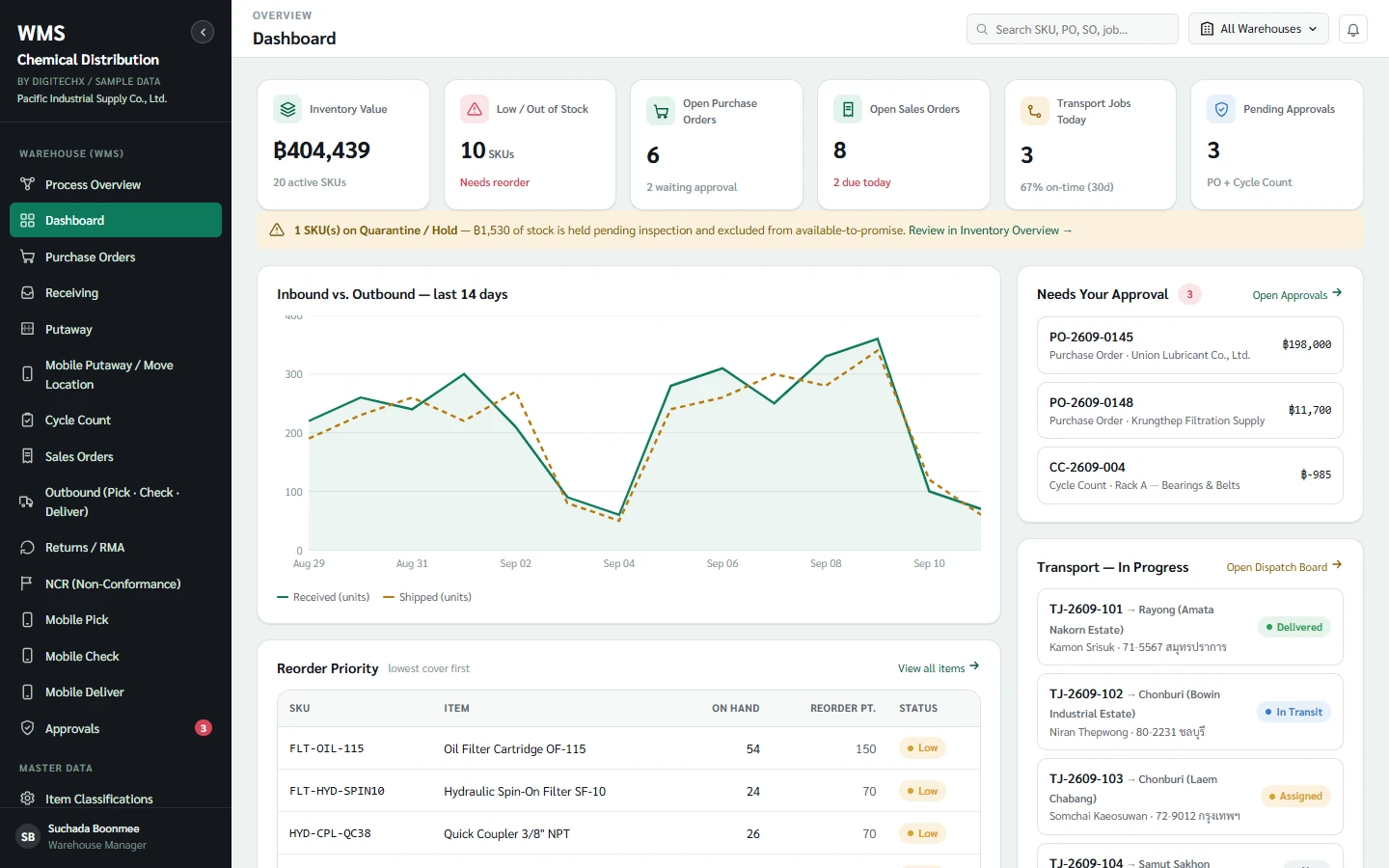
References
- GS1 Global Traceability Standard
- DigitechX: Warehouse Management System for Distributors
- DigitechX: Cold Chain Warehouse Management System
Information and sources reviewed: 8 October 2026