
An Energy Management System (EMS) shows a factory where and when electricity is used, and why usage changes. The factory can then use that data to choose cost-saving measures and check their results. The electricity bill does not fall as soon as the system is installed. Savings come when the factory team uses the data to change how equipment runs or to improve it.
01
See where and when electricity is used
A monthly bill shows the total for one electricity account. It does not show which production line, cold room or machine group used the power. An EMS brings readings from each power meter into one screen, so executives see both the total and each part of the factory layout.
What the system does
Collects meter data continuously instead of manual rounds, and shows totals by plant, line and area
What the factory team does
Decides which area each meter covers and which areas executives need to see separately
02
Choose cost-saving measures from data before investing
Before buying energy-saving equipment, a factory should know where usage is unusual, such as power drawn while nothing is produced, or similar areas with very different usage. This data ranks the measures and reduces the risk of investing in the wrong place.
What the system does
Compares usage with production time and between areas, and alerts when usage passes a set threshold
What the factory team does
Inspects the site, finds the cause and chooses measures that fit production limits
“The system provides the data, the factory team acts, and the system's numbers show whether it paid off”
03
Measure before and after to show whether it pays
Savings used for decisions must be compared under the same conditions, such as the same measurement boundary and comparable output. An EMS keeps data from before and after each measure in one place, so executives see results from the factory's own data.
What the system does
Keeps historical data and produces reports that can be traced back
What the factory team does
Records which measure was done, when, and the production volume in that period
04
Extend later without starting a new system
Continuous, area-level electricity data can serve as Scope 2 input for a corporate carbon footprint (CFO) and as evidence for an ISO 50001 energy management system. The factory can also add solar or machine vibration monitoring to the same platform later.
What you gain
One set of electricity data serves cost reduction, carbon reporting and standards work
What to know
Installing an EMS does not automatically certify a factory for ISO 50001 or CFO. Certification still requires an assessment
Frequently asked questions
Does the electricity bill fall right after installing an EMS?
No. The system provides data. Savings come from measures the factory team carries out.
How is an EMS different from a meter-reading system?
A meter-reading system shows how much electricity was used. An EMS continues to targets, tasks, owners and checking results.
Try the system
See how an EMS presents factory data
Open the EMS demo to see total usage, a split by building, targets and post-improvement results on one screen
The demo uses simulated data
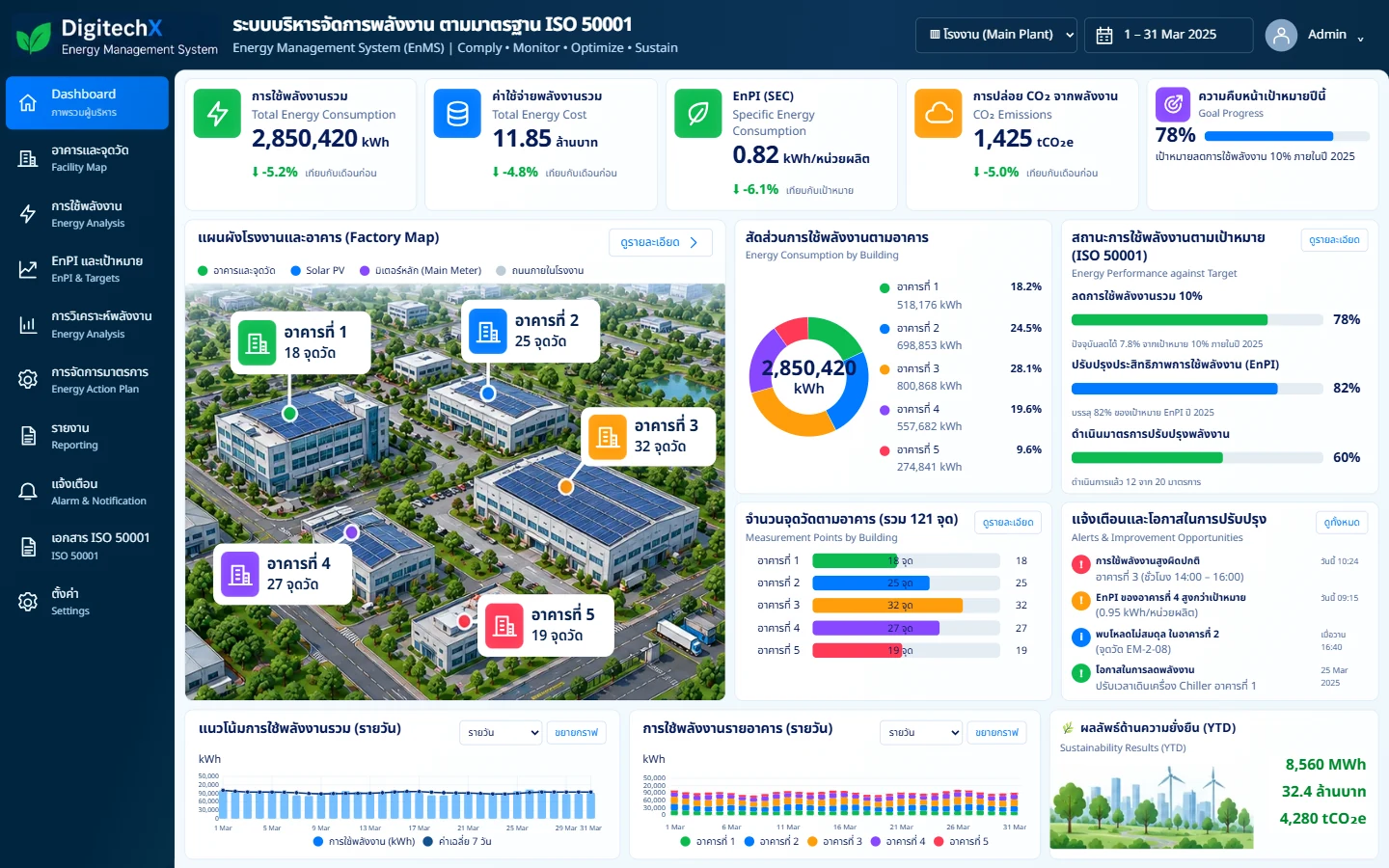 Click to open the demo
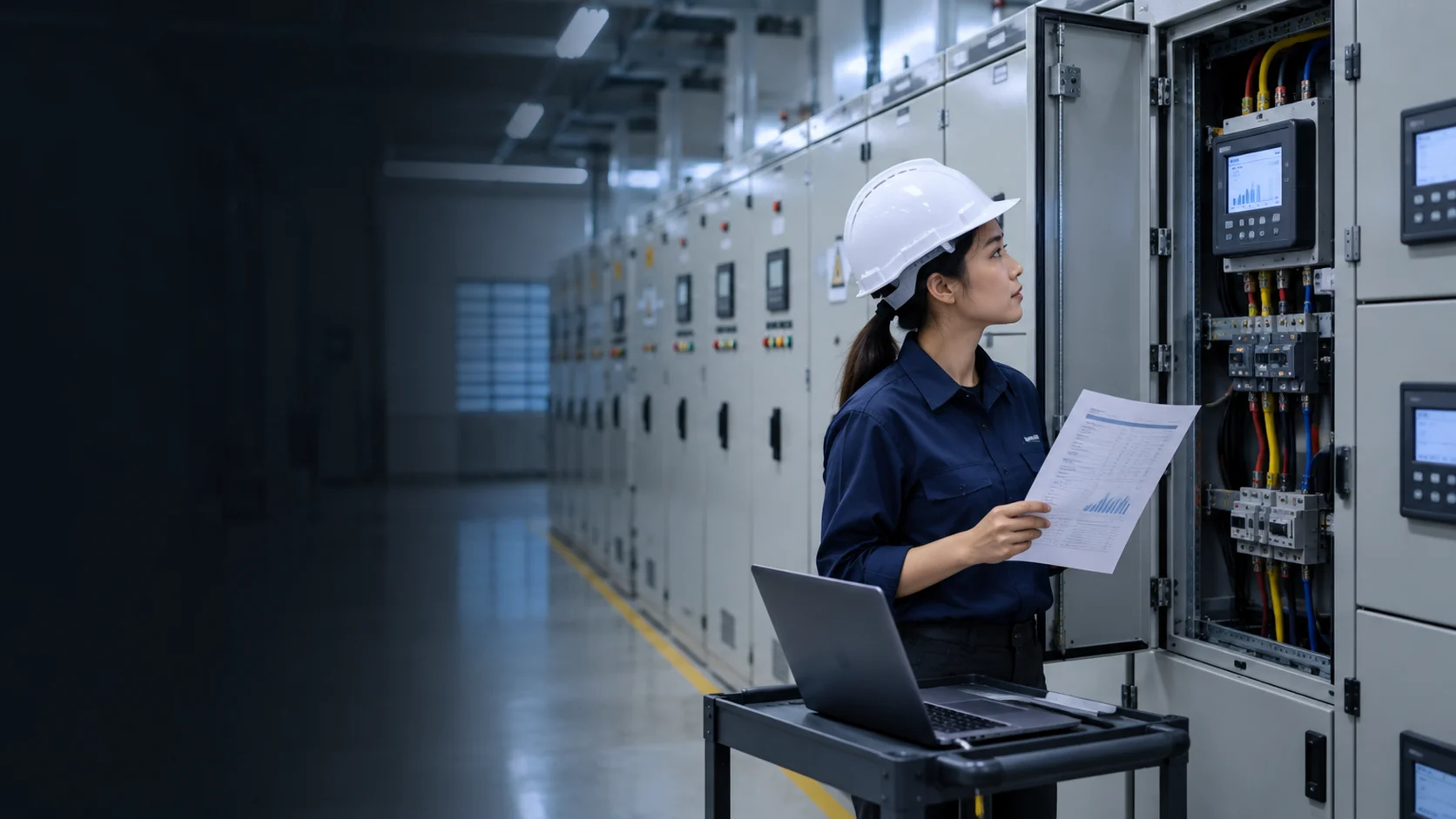
Next · Part 2 of 5
Where does a factory electricity bill come from? What the bill does not show, and an EMS does
Split the bill into parts, then see where in the factory each part comes from
Read the next part →Further reading: Energy Management System: what changes after energy monitoring?
References
- DOE 50001 Ready: Action Plans for Continual Improvement
- DOE 50001 Ready: Energy Performance Indicators and Energy Baselines
- GHG Protocol Scope 2 Guidance
- ISO: Energy management (ISO 50001)
Information and sources reviewed: 6 November 2026