
An EMS does not reduce electricity costs by itself. It shows where to act and whether the action worked, while the factory team carries out the work. This article explains which kinds of measures EMS data can lead to.
01
Find unusual usage
The quickest findings are usually electricity used without producing anything.
Power used when nothing is produced
For example lunch breaks, after shifts or holidays, when the usage graph does not drop
Similar areas with different usage
For example two cold rooms with similar loads, where one clearly uses more. Inspect the site next
02
Manage peaks caused by loads running together
Once the team knows when the peak occurs and which machines run together, production can consider which work to shift or swap.
What the system does
Shows when peaks occur and alerts when usage nears the threshold
What the factory team does
Decides which equipment to shift or swap, considering production limits and product quality
“An EMS does not cut the bill by itself. It shows where to act first”
03
Rank measures before investing
Data separates measures that can start now from those that need investment, and compares value before asking for budget approval.
No extra investment
Adjust running times, switch off unused equipment, match set points to the actual load
Investment required
Replace or upgrade equipment. An engineer should assess it, and before-and-after data confirms the result
Frequently asked questions
Can an EMS shed loads automatically?
It depends on the agreed scope. Monitoring and alerts are the starting point. Automatic equipment control is extra work that must be stated in the proposal.
What should a factory with cold rooms look at first?
Separate the refrigeration system's electricity from other uses, then compare it with the cooling load in the same period.
Try the system
See alerts and improvement opportunities in the demo
The demo shows alerts, improvement opportunities and the owner of each project
The demo uses simulated data
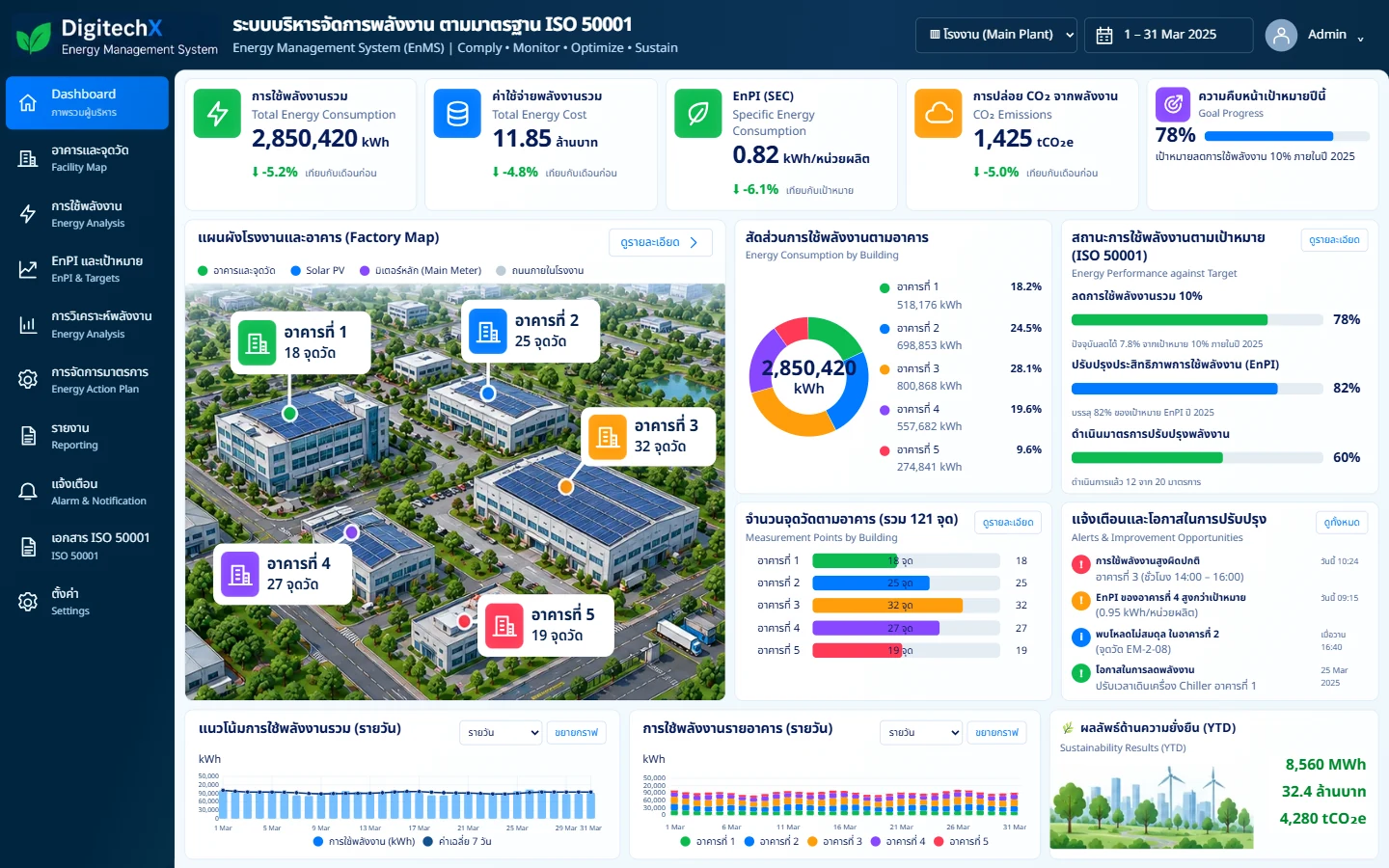 Click to open the demo

Next · Part 4 of 5
Is an EMS worth it? How to assess value and payback from your own factory data
Count the full project cost, set a baseline first, then measure savings from real measures
Read the next part →Further reading: Factory energy-saving measures: choose priorities before investingChiller energy savings: prepare the data before comparing efficiency
References
- DOE 50001 Ready: Improvement Opportunities
- PEA: Electricity Tariffs (tariff structure reference)
- DOE 50001 Ready: Action Plans for Continual Improvement
Information and sources reviewed: 6 November 2026