
A factory electricity bill summarises one whole account. Executives know how much they pay, but not which area or time period caused it. An EMS collects readings from measurement points across the factory over time, so it answers questions the bill cannot.
01
The bill shows a total, not the area
The bill reflects the utility meter at the supply point. If several buildings or lines share one account, the bill cannot show which part used more power.
What the bill includes
Energy used, power demand and time-based charges, according to the account's tariff type
What the bill leaves out
Which line, room or machine used the power, and exactly when maximum demand occurred
02
Three parts of the bill, reduced in different ways
Without separating the parts first, a chosen measure may not match the cost you want to reduce.
kWh: energy used
Reduced by cutting unnecessary running time or improving equipment efficiency
Peak demand: highest power demand
Caused by loads running at the same time. PEA documents use the highest 15-minute average demand, so data must be viewed by time period
TOU: time-of-use rates
Moving flexible work to another period can change cost even when energy use stays the same
03
How an EMS separates them
With measurement points by area and data recorded over time, executives can see which part of the bill rose and where it happened.
View by time period
See when usage peaks and which areas were drawing power at that time
Alerts
Notify the responsible person when usage nears or passes a threshold set by the factory
Frequently asked questions
Can kWh fall while demand charges stay the same?
Yes. A measure can reduce total energy without changing the period of maximum demand.
Must every machine have a meter?
No. Start with points that answer executives' key questions, then add more measurement points.
Try the system
See the screen that splits usage by building
The EMS demo includes a factory map and electricity use by building. Try it now
The demo uses simulated data
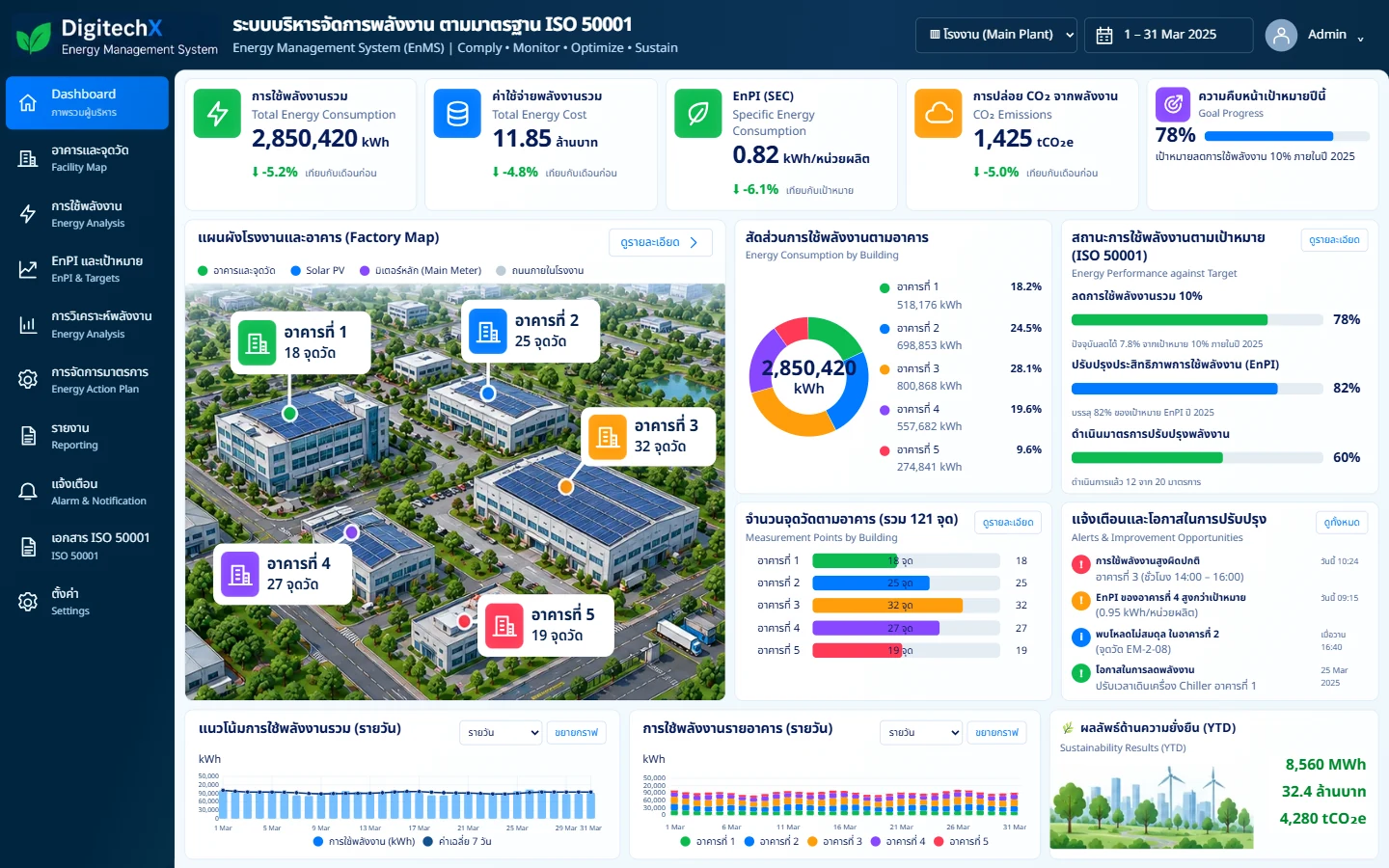 Click to open the demo

Next · Part 3 of 5
How does an EMS help reduce electricity costs? From data to measures the factory team can take
Find unusual usage, manage peaks and rank measures before investing
Read the next part →Further reading: Lower factory electricity costs: separate kWh, demand and TOUChecking electricity use with meter data
References
- PEA: Electricity Tariffs (tariff structure reference)
- DOE 50001 Ready: Energy Data Collection and Analysis
Information and sources reviewed: 6 November 2026